

Trees are vital to the environment, property value, and aesthetic appeal of New Jersey landscapes. But just like humans, trees are susceptible to illness, and understanding the threats is the first step to maintaining healthy, thriving greenery. This article explores common tree diseases in New Jersey, their symptoms, causes, and how to identify, treat, and prevent them. Whether you’re a homeowner or a business owner, learning the signs of tree disease in New Jersey can help you act early and protect your landscape investment.
For professional support, our team at Taylor Expert Arborists provides expert NJ tree inspection and treatment, diagnosis, and long-term care services.
Types of Tree Diseases
New Jersey’s diverse climate makes it a breeding ground for a wide array of tree diseases, ranging from fungal infections to bacterial and vascular pathogens. Woody trees, including ornamental crabapple trees, are among those affected by common fungal diseases in New Jersey, which can cause significant damage such as leaf loss, twig dieback, and reduced tree health. Below is a detailed look at several major diseases affecting trees across the state, including how they manifest and impact specific species.
Anthracnose
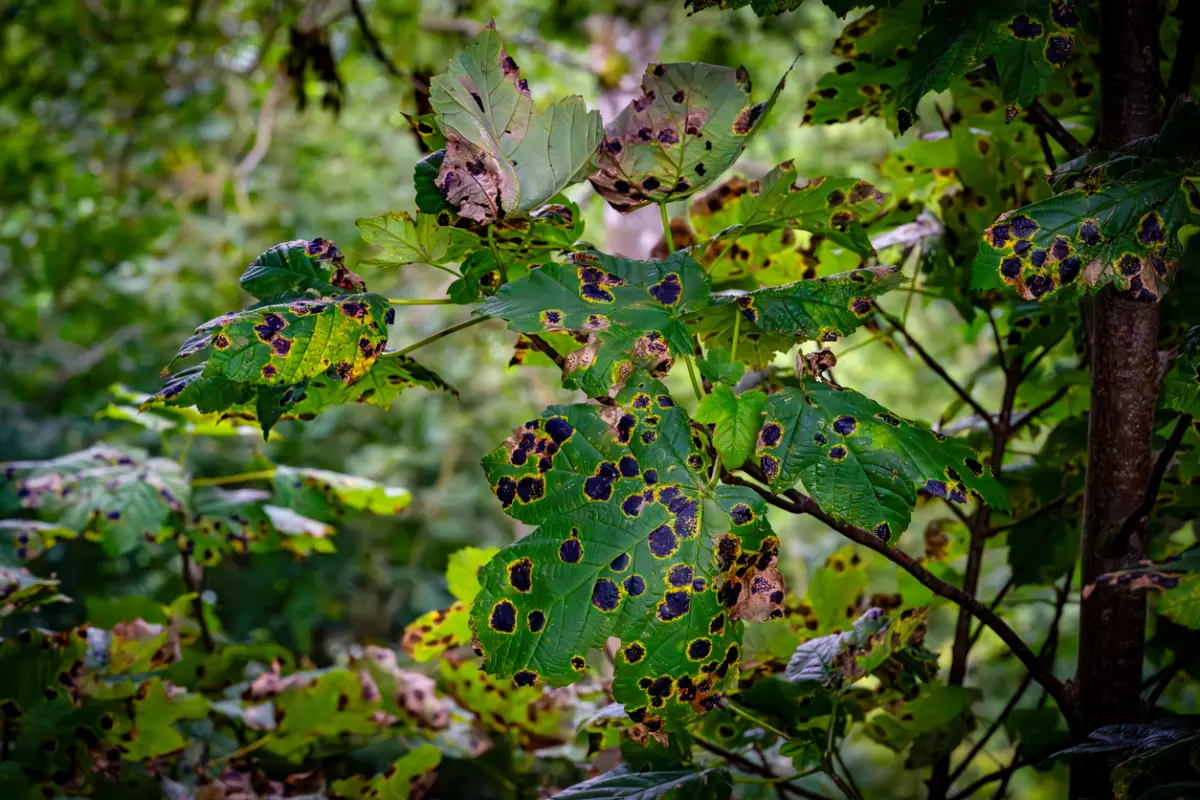
Anthracnose is a common fungal disease affecting shade trees such as sycamores, dogwoods, oaks, and maples. It thrives in cool, wet spring weather and is known for causing irregular, dark lesions on leaves, particularly along the veins. As the disease progresses, affected leaves may curl, turn brown, and drop prematurely. Twig dieback and cankers can also occur, leading to reduced tree vigor over time. Although rarely fatal, repeated infections can severely weaken a tree.
To help prevent the spread of anthracnose, it is important to remove fallen leaves from around the base of affected trees, as these can harbor fungal spores and contribute to rein
Leaf Spot Disease
Affecting a wide variety of species, including elm, maple, and flowering cherry, leaf spot diseases appear as small, circular or irregular dark spots on foliage. Fungal spores are often visible on affected leaves, appearing as black dots or spots that indicate ongoing infection.
These spots may grow, merge, and even develop a yellow halo. Apple scab is a specific leaf spot disease that affects both apple and ornamental crabapple trees, causing dark spots on leaves and fruit.
Though usually a cosmetic issue, in extreme cases it can cause significant leaf loss, especially in stressed trees. Fungal variants such as Septoria and Phyllosticta are commonly responsible. Severe infections can cause premature leaf drop, weakening the tree canopy.
Verticillium Wilt
This serious vascular wilt disease is caused by soil-borne fungi (Verticillium spp.) and impacts trees like maple, ash, and catalpa. Certain tree species are more susceptible trees to Verticillium Wilt and should be monitored closely. Symptoms include yellowing or browning leaves (often on one side of the tree), wilting, branch dieback, and dark streaks in sapwood. Since it disrupts water transport within the tree, the damage is systemic and irreversible. No known chemical cure exists, and severely affected trees may require removal.
Tree Blight
Tree blight refers to several fast-acting infections that damage blossoms, shoots, leaves, or stems. Fire blight, for example, is a bacterial disease that causes sudden blackening and death of branches, often giving trees a scorched appearance. Bacterial wetwood (slime flux), another common issue, causes foul-smelling sap to ooze from trunk wounds. It is important to identify and prune infected branches to prevent the spread of blight. These blights can be contagious and demand swift intervention, typically including pruning and disinfection. In cases where blight is severe or untreatable, tree removal may be necessary to protect surrounding trees.
Oak Wilt in New Jersey
Oak wilt is a highly aggressive tree disease affecting all oak trees, caused by the oak wilt fungus. Red oak is especially vulnerable and can die within weeks of infection. Symptoms include wilting and browning of leaves starting from the top of the tree downward, often progressing rapidly. The oak wilt fungus spreads by attacking trees through root grafts and insect vectors attracted to fresh wounds. The disease can progress from individual limbs to the entire tree, often resulting in complete tree death. Early detection and prompt removal of infected trees are critical to containment.
For a more detailed explanation on how to treat tree blight or diagnose a declining oak, consult a certified arborist from a New Jersey tree care company.
Insect-Related Diseases
Insects can be both a primary cause of tree damage and a vector for transmitting pathogens. In New Jersey, several insect species are responsible for major tree health issues, and identifying their presence early is critical to minimizing long-term harm. Below are three of the most significant insect-related threats to trees in the region.
Emerald Ash Borer (EAB)
The emerald ash borer is one of the most destructive invasive pests affecting New Jersey’s ash trees. Originally from Asia, this metallic green beetle targets all species of ash tree. Large ash trees are particularly vulnerable to emerald ash borer infestations. Adult beetles lay eggs in bark crevices, and once hatched, larvae tunnel beneath the bark and feed on the tree’s vascular tissue, disrupting nutrient flow.
Symptoms typically start with canopy thinning in the upper third of the tree, followed by bark splitting, branch dieback, and a noticeable increase in woodpecker activity. D-shaped exit holes—about the size of a pencil tip—on the bark are a telltale sign of infestation. If left untreated, EAB infestations almost always result in the complete death of the tree within a few years. Prompt treatment or preemptive removal is recommended. You can learn more in our emerald ash borer guide.
The emerald ash borer threatens the entire ash tree population and can have a devastating impact on the broader tree population in New Jersey.
Scale Insects and Aphids
Both scale insects and aphids are sap-sucking pests that can weaken trees over time and promote the growth of damaging fungi. Aphids are small, soft-bodied insects that cluster on leaves and stems, while scale insects appear as small, shell-like bumps attached to bark and branches.
Beech scale insects, including woolly beech scale insects, are significant pests that infest beech trees and are the primary vectors for beech bark disease. These insects create wounds on the bark, allowing fungal pathogens to invade and cause further damage.
These pests excrete a sugary substance known as honeydew, which often leads to the growth of sooty mold—a black fungal growth that interferes with photosynthesis. Besides weakening the tree by draining its fluids, scale and aphid infestations can attract secondary issues, such as fungal infections and ant colonies. Persistent infestations may require the use of horticultural oils or systemic insecticides, best administered by a certified arborist.
Gypsy Moth and Tent Caterpillars
Caterpillar pests like the gypsy moth (now commonly referred to as the spongy moth) and eastern tent caterpillar can cause extensive defoliation of deciduous trees, particularly oaks, maples, and birches. These insects feed voraciously on leaves during their larval stages, stripping branches bare and weakening the tree’s ability to produce energy. Repeated defoliation can leave host trees weak and more susceptible to disease.
While healthy trees can usually survive a single defoliation, repeated infestations over several seasons can leave trees vulnerable to secondary pathogens and eventual decline. Tent caterpillars also leave behind unsightly silken webs in tree forks and limbs. Effective management strategies include mechanical removal, targeted biological controls like Bacillus thuringiensis (Bt), and preventative tree health maintenance.
In all cases, early detection through regular tree inspections can prevent the escalation of insect-related diseases. Working with a trusted arborist helps ensure timely and effective responses to these invasive threats. Gypsy moths are a major pest throughout the eastern United States.
How To Identify Tree Diseases
Recognizing the early indicators of tree diseases is essential for maintaining the health of New Jersey’s urban and suburban landscapes. Spotting the early signs of disease is crucial, as it helps identify an infected tree before the problem spreads to other trees. Identifying issues before they become widespread allows for timely intervention and can mean the difference between saving a tree and losing it. While visual symptoms are the most immediate indicators, successful diagnosis also involves environmental analysis and, in more complex cases, lab testing. Trees infected with certain diseases may require immediate intervention to prevent further damage.
Visual Indicators of Disease
Trees communicate distress through a variety of physical changes. Disease often affects trees by causing visible symptoms and decline. Leaf discoloration—such as yellowing, browning, or spotting—often signals nutrient deficiencies or fungal infections. When leaves fall prematurely or begin to curl, it may indicate systemic problems like verticillium wilt or insect-related stress.
Structural changes in bark are also red flags. Cankers—sunken or swollen lesions on branches and trunks—often suggest bacterial or fungal infection. Other indicators include fungal growth, such as mushrooms or conks at the tree base, which frequently point to internal decay. Oozing sap, foul-smelling liquid, or peeling bark further indicates that a tree’s vascular system may be compromised. When the host tree displays these symptoms, the tree’s health suffers and may require professional care.
Diagnostic Tools and Techniques
A thorough diagnosis begins with a systematic visual inspection of the canopy, trunk, branches, and root flare. Arborists look for patterns in foliage damage, bark texture changes, and physical anomalies like galls or boreholes. However, visual assessment alone is rarely sufficient for a full diagnosis.
Soil testing is often the next step, helping determine whether poor drainage, nutrient imbalance, or pH irregularities are contributing to tree decline. Moisture levels, compaction, and the presence of pathogens in the soil can drastically influence a tree’s health. Root rot disease, such as Armillaria root rot, often originates in decaying wood, especially old maple tree stumps, and can be detected through soil and tissue analysis.
For elusive or advanced cases, arborists may take core samples of wood or send affected tissue to a lab for fungal or bacterial analysis. DNA testing and microscopic evaluation can reveal root rot fungi, wilt pathogens, or insect-borne viruses that are not visible externally.
Proper diagnosis is the cornerstone of any effective treatment plan. Partnering with a certified arborist is crucial to ensure a comprehensive evaluation. Scheduling a tree disease diagnosis in New Jersey gives property owners the advantage of professional-grade tools, scientific testing, and expert guidance tailored to the unique conditions of New Jersey’s environment.
Tree Disease Symptoms
Many of the most common tree diseases in New Jersey are caused by fungal diseases, and common fungal diseases often present overlapping symptoms. Each disease presents unique symptoms, but overlapping indicators make expert evaluation crucial. Here’s what to watch for:
Fungal Symptoms:
- Powdery white, black, or orange spores
- Leaf spots with distinct margins
- Mold or mildew on leaves or stems
- In spruce trees affected by needle cast, only the younger needles remain at the branch tips, while older needles are shed
- Apple trees may show fungal symptoms such as leaf spots and fruit lesions
Bacterial Symptoms:
- Wet, dark lesions
- Wilting and discoloration without apparent damage
- Sticky or oozing fluids
Insect-Related Symptoms:
- Tiny boreholes in bark
- Chewed or skeletonized leaves
- Presence of frass (sawdust-like material)
- Trees infested with pests may show rapid decline, including dieback and leaf curling.
- Some insects are capable of attacking trees directly, leading to severe damage.
Understanding these clues helps in determining the next steps—whether it’s treatment, pruning, or full removal.
Regional Considerations
New Jersey’s geographic and climatic features play a significant role in the development and spread of tree diseases. The state’s coastal proximity, dense urban centers, and variable weather patterns—especially its humid summers and wet springs—create a perfect storm for fungal outbreaks, pest invasions, and soil-related stress conditions.
The health of the overall tree population in New Jersey is influenced by the spread of disease from infected trees to other trees, which can lead to declines in affected species and impact the broader ecosystem.
Environmental Conditions Affecting Tree Health
Seasonal fluctuations and consistent moisture accumulation can stress trees and make them more vulnerable to disease. High humidity and rainfall, especially in spring and early summer, contribute to conditions where fungal pathogens like anthracnose and powdery mildew thrive. Prolonged soil saturation reduces oxygen availability to roots, often leading to rot and opportunistic fungal invasion.
Proper planting tree techniques and careful site selection are essential for establishing a healthy tree and reducing the risk of disease.
Urban and suburban settings face their unique challenges. In cities, compacted soils and reduced canopy coverage can lead to extreme fluctuations in temperature and moisture, encouraging blight and pest activity. Suburban neighborhoods—especially those with tree-lined streets and mixed native/non-native plantings—often see higher rates of insect infestations like the emerald ash borer, which easily travel between properties.
Local Disease and Pest Trends in New Jersey
Over the last decade, arborists have noted a rise in the incidence of oak wilt in southern and central regions of the state. This is attributed to both increased regional humidity and the spread of infected trees through interconnected root systems. Additionally, recurring wet seasons have resulted in more frequent outbreaks of anthracnose and various leaf spot diseases, particularly on maple trees, dogwood, and flowering cherry trees.
Because New Jersey includes USDA Hardiness Zones 6 and 7, trees planted here must be resilient to temperature extremes, high rainfall, and soil variability. Unfortunately, many ornamental or imported trees popular in landscaping lack the disease resistance of native species, making them especially susceptible. Black knot disease is particularly problematic for younger trees, especially during wet spring conditions.
The Importance of Regional Expertise
Given the environmental stressors and disease trends unique to New Jersey, tree care plans must be regionally tailored. Proactive inspection and diagnosis are critical tools in mitigating risk. A local arborist understands the timing of disease cycles, local pest behaviors, and the most effective treatments based on your geographic zone.
By working with professionals who provide NJ tree inspection and treatment, property owners can develop proactive management strategies that reflect New Jersey’s regional challenges. From selecting disease-resistant species to timing fungicide applications with the local climate, regional knowledge is essential for long-term tree health and resilience.
Best Tree Disease Prevention Tips for New Jersey
- Schedule regular tree health inspections
- Ensure proper watering and mulching practices
- Avoid mechanical damage to bark and roots
- Use native or disease-resistant tree species
- Following these prevention tips can help reduce the risk of tree mortality due to disease
Conclusion
Tree diseases can be devastating, but with the right knowledge and professional guidance, New Jersey property owners can keep their trees healthy and vibrant. By learning how to identify tree fungus in NJ, recognizing the symptoms of common infections like oak wilt or emerald ash borer, and taking proactive care measures, you significantly increase your landscape’s resilience.
If you’re unsure about the condition of a tree or need help creating a disease prevention plan, contact Taylor Expert Arborists for comprehensive tree disease diagnosis in New Jersey. Let’s work together to protect your green assets and preserve the natural beauty of your property.


