


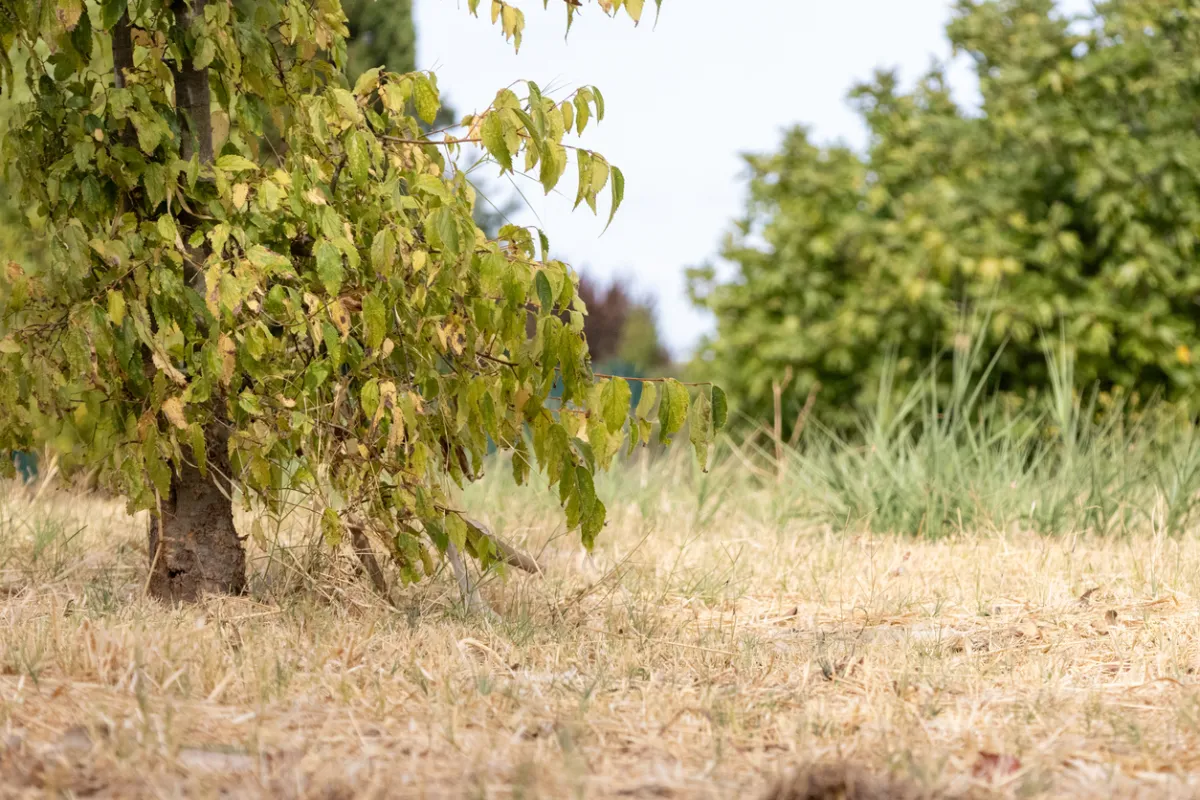
Take a walk through your neighborhood, and you might notice subtle shifts in the landscape. Perhaps the great oak in your front yard is dropping its leaves earlier than it did a decade ago, or maybe the maples down the street are struggling to push out a full canopy of leaves after a particularly brutal summer. These are not isolated incidents or simple bad luck; they are the visible, localized consequences of a global phenomenon.
Understanding the effects of climate change on trees is no longer a topic reserved for environmental scientists—it is a critical necessity for any homeowner, property manager, or nature enthusiast who wants to preserve the beauty and structural integrity of their local landscape.
Because the signs of environmental stress can be incredibly subtle until it is too late, early detection is vital. To stay ahead of these shifts and protect your property, scheduling a comprehensive tree health inspection with certified professionals is the most proactive step you can take to establish a baseline for your landscape’s vitality.
Understanding the Big Picture: Global Warming and Trees
To grasp what is happening in our own backyards, we first need to understand the complex relationship between global warming and trees. Historically, trees and the climate have existed in a symbiotic balance. Trees act as massive carbon sinks, absorbing carbon dioxide from the atmosphere and storing it in their wood, roots, and the surrounding soil. In return, a stable climate provides the predictable seasonal cues—steady spring warming, reliable summer rains, and gradual winter cooling—that trees need to regulate their life cycles.
However, as global average temperatures rise due to increased greenhouse gas emissions, this delicate balance is unraveling. The baseline conditions that local tree species have relied upon for thousands of years are shifting faster than the trees can naturally migrate or evolve. A tree planted fifty years ago was specifically adapted to the hardiness zone of that specific era. Today, that same tree may find itself living in a climate that resembles a region hundreds of miles to the south.
This rapid shift forces trees to expend massive amounts of stored energy just to maintain basic physiological functions. When a tree uses all its energy simply to survive a grueling heatwave, it has very little energy left to fight off diseases, grow new wood, or develop robust root systems. Global warming essentially puts our urban and suburban forests on a permanent defensive footing.
The Direct Climate Change Impact on Tree Health
When we talk about the climate change impact on tree health, we are primarily looking at how extreme and unpredictable weather patterns disrupt the essential biological processes that keep a tree alive.
Shifting Hardiness Zones and Temperature Stress
Every tree species has a specific threshold for heat and cold, often categorized by agricultural hardiness zones. As the planet warms, these zones are migrating poleward. For your backyard trees, this means they are experiencing prolonged periods of extreme heat that they simply were not genetically programmed to endure.
During extreme heatwaves, trees undergo severe physiological stress. To conserve water, a tree will close its stomata—the microscopic pores on its leaves used for gas exchange. While closing these pores prevents the tree from losing water through transpiration, it also completely halts the process of photosynthesis. The tree stops producing the sugars it needs for food. If a heatwave lasts for weeks, the tree essentially begins to starve. You will often see this manifest as leaf scorch, where the edges of the leaves turn brown and crispy, or as premature leaf drop in the middle of August.
Altered Precipitation Patterns: The Extremes of Drought and Flood
Alongside temperature stress, erratic precipitation is a primary driver of declining canopy health. We are increasingly seeing a pattern of prolonged, intense droughts followed immediately by torrential, flooding downpours. Neither scenario is conducive to a healthy root system.
During a severe drought, the soil dries out to a depth that even established taproots cannot reach. As the tree desperately attempts to pull water from bone-dry soil, the tension within its vascular system (the xylem) becomes so immense that it can literally pull air bubbles into the tissues, a process called cavitation. This blocks the flow of water entirely, causing branches to die back from the tips inward.
Conversely, when massive amounts of rain fall in a very short period, the soil becomes totally saturated. Tree roots need oxygen to survive. When soil is waterlogged for days or weeks, the roots begin to suffocate and rot. A tree with a compromised root system from flooding cannot absorb nutrients properly, leading to yellowing leaves, stunted growth, and a high risk of completely uprooting in the next wind storm.
The Science of Survival: How Climate Affects Tree Growth
It is a common misconception that more carbon dioxide in the air will automatically result in lush, healthier forests. While the reality is deeply nuanced, understanding how climate affects tree growth reveals a troubling paradox about the future of our landscapes.
The Double-Edged Sword of Elevated CO2
Because trees use carbon dioxide for photosynthesis, increased levels of CO2 in the atmosphere can indeed stimulate faster growth in some species. This phenomenon is known as the CO2 fertilization effect. However, this rapid growth comes with a high hidden cost.
When trees grow at an accelerated rate due to high CO2, the wood they produce is often significantly less dense than wood grown at a normal pace. This rapid, low-density growth results in weaker structural integrity. The branches are more prone to snapping under the weight of snow, ice, or their own foliage, and the trunk is more susceptible to high winds. Furthermore, studies have shown that leaves grown in high-CO2 environments often contain lower concentrations of essential nutrients like nitrogen. This means that the insects and herbivores that rely on these leaves for food must eat more foliage to get the same nutritional value, leading to increased defoliation and stress for the tree.
Phenological Mismatches and Premature Budding
Phenology is the study of cyclical natural phenomena, such as when flowers bloom or when animals migrate, in relation to climate. One of the most disruptive ways climate change alters growth is through phenological mismatch.
As winters become milder and spring-like temperatures arrive earlier in the year, trees are tricked into breaking dormancy prematurely. They push out tender new buds, leaves, and flowers weeks before they traditionally would. The danger arises because the risk of a late-season frost has not disappeared. A sudden plunge in temperature in late April or May can utterly destroy this new, vulnerable growth. When a tree loses its first flush of leaves to a late frost, it must expend an immense amount of reserve energy to push out a second canopy. This secondary canopy is rarely as robust as the first, leaving the tree weakened and stunted for the remainder of the growing season.
The Invisible Threat: Climate Stress on Trees
A healthy, vigorous tree has natural defense mechanisms to ward off insects and pathogens. It can produce sap to push out boring insects or deploy chemical compounds to neutralize fungal infections. However, chronic climate stress on trees drastically compromises these immune responses.
Increased Vulnerability to Aggressive Pests
Warmer temperatures are a boon to destructive tree pests. In the past, deep, sustained winter freezes served as a natural population control, killing off the overwintering larvae of many harmful insects. With winters becoming increasingly mild, a vastly higher percentage of these pests are surviving to see the spring.
Furthermore, longer growing seasons allow many insect species to complete multiple reproductive cycles in a single year. Instead of dealing with one wave of pests, your trees may now face two or three generations of hungry insects before autumn arrives. When a tree is already stressed by drought or heat, it emits specific chemical signals—distress calls—that actually attract certain pests, like bark beetles and wood borers. Once these pests breach the bark of a weakened tree, they can quickly destroy its vascular system, turning a stressed tree into a dead tree in a matter of months.
The Spread of Fungal and Bacterial Diseases
Changes in humidity and temperature also create ideal breeding grounds for various plant pathogens. Fungal diseases, in particular, thrive in the warm, overly damp conditions that follow heavy, unseasonal rainfalls. Diseases like powdery mildew, apple scab, and oak wilt are expanding their geographic ranges and increasing in severity.
Prolonged periods of high humidity prevent leaves from drying out properly, allowing fungal spores to easily germinate and penetrate the leaf surface. As these diseases spread through the canopy, they destroy the leaf tissue, severely limiting the tree’s ability to photosynthesize. Over several consecutive years of severe fungal infection, a tree will exhaust its energy reserves and eventually succumb to the disease.
Visible Destruction: Tree Damage from Extreme Weather
While biological stress and pests work slowly over time, the most immediate and dramatic consequences of a changing environment come from the sky. Tree damage from extreme weather is becoming a frequent and costly reality for property owners across the country.
High Winds, Hurricanes, and Structural Failure
As ocean temperatures rise, the energy available to fuel storm systems increases. This leads to more frequent and more intense wind events, including hurricanes, derechos, and severe localized thunderstorms.
High winds test the structural integrity of every tree in their path. Trees that have developed co-dominant stems (two main trunks of similar size) or have weakened, low-density wood from rapid CO2-fueled growth are prime candidates for catastrophic failure. Windthrow—where the entire tree is levered out of the ground—is exceptionally common when high winds follow heavy rain events that have saturated and loosened the soil. When a massive tree fails, it poses a severe threat to homes, power lines, and human life.
Ice Storms and Late Frosts
While global warming implies overall hotter temperatures, climate change also disrupts the polar vortex, leading to erratic, severe winter weather events reaching further south than usual.
Ice storms are particularly devastating to broadleaf deciduous trees and evergreens alike. As freezing rain coats the branches, the sheer weight of the ice can snap massive limbs as easily as twigs. A tree with structural defects, such as internal decay or poor branch attachment angles, is highly likely to suffer severe crown damage during an ice storm. The wounds left behind by these torn branches then become open invitations for the pests and diseases mentioned earlier, compounding the damage long after the ice has melted.
Adapting Your Landscape: Climate Change Tree Care
The challenges are daunting, but homeowners are not helpless. By shifting our approach to landscaping and adopting proactive climate change tree care, we can cultivate resilient properties capable of withstanding these new environmental pressures.
Choosing the Right Species for the Future
The most crucial step in modern landscaping is planting for the climate of tomorrow, not the climate of the past. If you are replacing a lost tree or expanding your landscape, you must carefully consider species selection.
This involves researching trees that are native to areas slightly warmer and drier than your current location—a concept sometimes referred to as assisted migration. You want to select drought-tolerant species that have deep root systems and are known for strong, dense wood development. Avoid planting species that are currently struggling in your region, as their decline will only accelerate in the coming decades. Diversity is also your best defense; planting a wide variety of tree species ensures that a single pest or a specific weather event won’t wipe out your entire canopy at once.
Proactive Soil and Water Management
Because natural precipitation is becoming less reliable, how you manage water on your property is paramount.
Deep, infrequent watering is vastly superior to frequent, shallow watering. You want to encourage tree roots to grow deep into the soil where temperatures are cooler and moisture is more consistent. Using a soaker hose around the drip line of the tree (the area directly below the outer circumference of the branches) during dry spells can save a mature tree from catastrophic drought stress.
Proper mulching is another vital component of climate adaptation. A two-to-three-inch layer of organic mulch applied around the base of the tree (but not piled against the trunk) acts as an incredible insulator. It keeps the soil cool during heatwaves, retains moisture during droughts, and slowly breaks down to provide steady, natural nutrients to the root system, reducing the need for synthetic fertilizers that can force weak, rapid growth.
Regular Pruning and Structural Support
To prevent extreme weather from tearing your trees apart, structural pruning is essential. This is not about aesthetics; it is about aerodynamics and weight distribution.
By strategically removing dead, diseased, or crossing branches, you reduce the wind resistance of the canopy, allowing gale-force winds to pass through the tree rather than pushing against it like a solid sail. Furthermore, identifying and mitigating structural defects—such as weak branch unions or signs of internal decay—before storm season arrives can prevent catastrophic failures. For valuable, mature trees with structural weaknesses, professional cabling and bracing can provide the support needed to survive severe weather events.
Conclusion: Protecting Your Canopy with Taylor Expert Arborists
The changing climate is rewriting the rules of landscaping and property management. The effects of climate change on trees are complex, compounding, and undeniable. From the invisible, silent stress of shifting temperature zones and aggressive new pathogens to the violent, sudden destruction brought by intensified storms, our trees are fighting a battle on multiple fronts. We can no longer take their resilience for granted.
You do not have to navigate these complex environmental challenges alone. At Taylor Expert Arborists, our team of certified professionals understands the specific, localized impacts that global weather shifts are having on our regional canopy. We possess the scientific knowledge and practical experience required to diagnose subtle stress factors, mitigate storm risks, and prescribe treatments that genuinely bolster your trees’ natural defenses.
Whether you need to assess the damage after a severe weather event, treat a sudden pest infestation, or simply want to develop a long-term care plan to protect your generational landscape, we are here to help. If you are concerned about the resilience of your property in the face of shifting weather patterns, do not wait for a branch to break or a canopy to wither. Contact us today to partner with Taylor Expert Arborists. Together, we can ensure your trees remain strong, healthy, and beautiful for decades to come.


