

Key Takeaways
- Dense ivy on tree trunks and into the canopy weakens trees, hides serious defects, and increases windthrow risk during storms
- English ivy (Hedera helix) competes for light, moisture, and nutrients while smothering tree bark and branches
- Removal is most urgent on young, declining, or leaning trees near houses, driveways, and public paths
- Safe ivy removal involves cutting vines on the trunk, clearing a “lifesaver ring” around the base, and letting upper ivy die back naturally
- While ivy has wildlife value, it should be controlled on trees for safety and long-term tree health—arborists can help with large or hazardous trees
Why Ivy On Trees Is A Problem
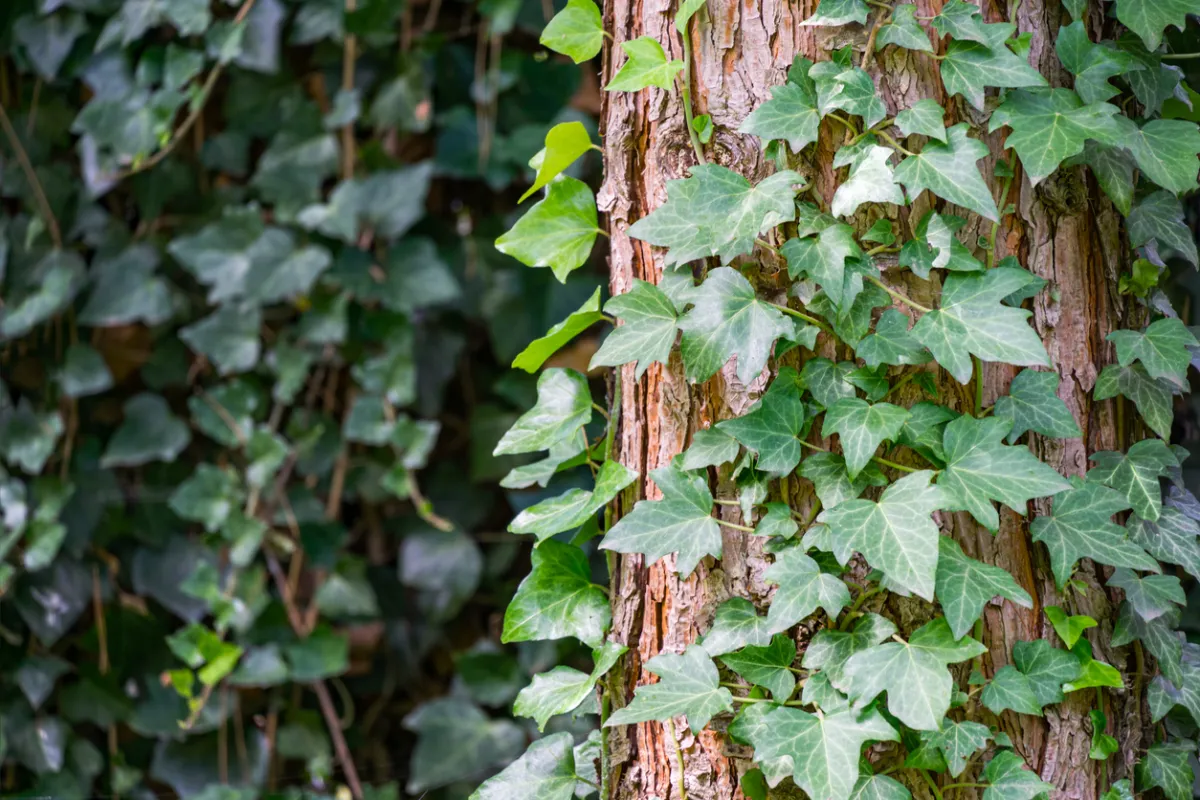
That evergreen blanket of ivy creeping up your trees might look picturesque, but it becomes a serious problem when it covers the tree bark and reaches the canopy. Understanding why you should be removing ivy from trees can save you thousands in emergency tree work.
Ivy grows using aerial roots that cling to bark, forming a thick curtain of foliage that can climb 20-30 metres over a decade. In wet, windy winters—storms hitting the UK and Pacific Northwest between 2020-2024 have demonstrated this clearly—ivy-laden trees are disproportionately likely to shed limbs or fail outright.
Most homeowners only notice ivy when it has already formed heavy, woody ropes around the trunk and branches. By then, the damage is done. Prevention and early control are far easier and cheaper than dealing with a storm-damaged, ivy-choked tree later.
How Ivy Damages Trees Over Time
Ivy rarely kills a perfectly healthy tree by itself, but it progressively weakens and destabilises trees over a few years through multiple mechanisms.
Competition for resources: The ivy roots siphon water and nutrients from the surrounding soil, starving the tree’s feeder roots. During dry summers, this competition becomes severe. Meanwhile, ivy foliage intercepts sunlight that other plants and the tree’s own leaves need.
Physical trunk damage: Ivy vines constrict around the bark like a corset, making it harder for the tree to expand naturally. The dense covering:
- Traps moisture against the bark
- Encourages decay fungi and disease
- Creates habitat for pest insects
- Prevents natural bark expansion
Canopy impacts: When ivy reaches the crown, it shades the tree’s own foliage, reducing photosynthesis and causing dieback in interior branches. Healthy trees with broad, dense crowns tolerate this better than suppressed specimens.
Street trees in compacted soil, old orchards in depleted ground, and already-declining specimens are far more vulnerable than vigorous woodland trees.
Hidden Safety Risks From Ivy
Ivy acts like a dense cloak, hiding defects that would otherwise be visible during a ground inspection. This creates serious problems for property owners.
Ivy covers can obscure:
- Cracks and cavities in the trunk
- Fungal fruiting bodies indicating internal decay
- Old pruning wounds
- Dead branches that might fall in the wind
In cities and suburbs, heavily ivy-covered trees close to houses, car parks, children’s play areas, and public pavements present higher liability risks. Tree professionals often must remove or thin ivy before they can properly assess a tree’s structural condition.
Where ivy completely covers a leaning or previously storm-damaged tree, prioritise removal and inspection rather than waiting to see what happens.
When You Should Definitely Remove Ivy
Not every patch of ivy needs eradicating. However, there are clear situations where removal from trees is strongly advised.
High-risk scenarios requiring action:
- Ivy covering more than half the trunk height
- Ivy reaching into the upper canopy
- Stems thicker than a thumb are winding around branches
- Trees within falling distance of roofs, conservatories, power lines, driveways, or patios
Removal is especially urgent on small ornamental trees, fruit trees, conifers, and already-declining specimens that tolerate competition poorly. These can die within a few years under heavy ivy growth.
In conservation areas or where Tree Preservation Orders apply (common in many UK and US cities), seek professional advice before large-scale ivy removal or tree work.
Balancing Wildlife Value And Tree Health
Ivy flowers from September to November, and berries often persist into late winter. Birds eat these berries, and insects rely on the late-season nectar. The flowers provide food for species, including ivy mining bees.
The goal is not to destroy ivy everywhere, but to remove it from trunks and crowns while allowing controlled groundcover or boundary growth where safe.
Practical balance tips:
- Time major removal outside peak nesting season (March-August in temperate climates)
- Check carefully for active nests before cutting
- Leave some ivy on walls, fences, or dedicated wildlife areas away from vulnerable trees
- Maintain habitat for nesting birds and shelter for native species
Protecting mature trees from failure ultimately also protects the habitat they provide for birds, bats, and invertebrates.
Step-By-Step: How To Remove Ivy From Trees Safely
This section gives homeowners and gardeners a practical, low-risk method for removing ivy from trunks and roots without harming the tree.
Safety and PPE first:
- Sturdy gloves and long sleeves
- Eye protection
- Where poison ivy or similar species are possible, confirm the species before handling
The “lifesaver ring” concept is essential: cut and remove ivy in a band from ground level up to about 1-1.5 metres to break the supply from roots to upper ivy growth.
Cutting method:
- Use hand pruners or a pruning saw to cut every vine around the trunk circumference
- Make cuts at two heights: a few centimetres above the soil and at chest height
- Take care not to damage bark—never pull or yank ivy stems
- Gently peel ivy away from the trunk within that band
- Leave dead vines above the cut in the canopy to dry and fall naturally over 6-24 months
The dead ivy sprouts and stems will turn brown and brittle. Wait for them to fall rather than tearing them off, which can strip bark and create entry points for disease.
Removing Ivy Roots Around The Base
Killing or greatly reducing ivy roots around the tree is essential to stop rapid regrowth after you cut ivy vines on the trunk.
Clear a bare soil zone 1.5-2 metres in radius around the trunk:
- Pull runners by hand carefully
- Lever out thicker roots with a hand fork or mattock
- Work when the soil is moist (after autumn or spring rain) for easier removal
Dispose of woody stems and root sections in green-waste bins rather than composting them, as they can create a noxious weed problem by re-sprouting in garden compost.
After clearance, add a 5-10cm layer of woodchip mulch to suppress new ivy seedlings and protect tree roots. Keep mulch a few centimetres away from direct contact with the trunk to prevent rot.
Ongoing Monitoring And Regrowth Control
Ivy seeds are widespread because birds eat the berries and spread them across your yard and beyond. Some regrowth is almost inevitable near mature stands.
Simple inspection routine:
- Walk around key trees every few months (early spring and autumn)
- Pull out new seedlings and thin runners while small
- In most gardens, 15-30 minutes of hand-pulling two or three times a year keeps trunks clear
For very large properties, periodic visits from a tree care or grounds maintenance team can manage ivy alongside other seasonal tasks. Keep photographic records before and after removal so structural changes and any new defects become easier to track.
Why Early Ivy Removal Saves Money And Trees
Proactive ivy management reduces long-term costs and prevents emergency call-outs after storms—a much better approach than reactive removal.
| Scenario | Typical Cost/Effort |
|---|---|
| Light ivy on young tree | Single routine visit, hand tools |
| Decades-old vines on tall tree | Climbers, rigging, multiple days |
| Major limb failure repair | Tree surgery plus insurance, vehicle, injury costs |
Preventing a major limb failure over a driveway or roof avoids not only tree surgery costs but also insurance excesses and potential injury claims.
Once ivy is off the trunk, arborists can spot and address early problems—cavities, fungal decay, crossing limbs—before they become harmful to tree health or dangerous to people.
Homeowners planning landscaping or renovation in 2026 and beyond should integrate ivy control into broader tree management plans rather than treating it as an afterthought.
When To Call In A Professional
While many small ivy problems are DIY-friendly, some situations clearly need professional tree care support.
Call an arborist when:
- Trees are very tall, with ivy reaching the upper crown
- Trees are close to buildings, power lines, or roads
- The trunk cannot be seen at all under thick, vigorous ivy
- You’re dealing with cold weather conditions, making climbing hazardous
Qualified arborists can climb safely, use specialist lowering techniques for dead ivy-laden branches, and avoid tearing or stripping bark. They can also advise whether ivy should be removed gradually over one or two seasons to avoid sudden exposure shock in heavily shaded crowns.
Seek written quotes and ensure contractors are properly insured and certified by recognised bodies in your country or region.
Need Help Removing Ivy From Your Trees?
If you’re dealing with heavy ivy growth and want to protect your trees’ health and safety, trust the experts at Taylor Expert Arborists. Our certified arborists specialize in safe, effective ivy removal and tree care tailored to your needs. Don’t wait for damage to occur— contact Taylor Expert Arborists today for a consultation and keep your trees strong and beautiful for years to come.


