


The majestic canopy of a mature tree often gives the impression of unshakeable resilience. Yet, beneath the bark and within the root systems, trees are constantly engaged in a silent, invisible battle against environmental and mechanical threats. For property owners and managers, especially those responsible for urban trees, recognizing the subtle signs and symptoms of tree stress—including the common signs that indicate health problems—is not just an exercise in good horticulture; it’s a critical component of risk management and property preservation.
Tree health is crucial for the longevity and aesthetic value of trees. Recognizing tree stress symptoms early is the key to maintaining a healthy and safe landscape. A thriving tree provides shade, enhances air quality, and contributes positively to property value. A stressed tree quickly becomes vulnerable to disease, pest infestation, and structural failure. If you are concerned about the welfare of the trees on your property, a proactive approach is always the best defense. We at Taylor Expert Arborists are dedicated to helping clients understand and mitigate these risks.
Understanding Tree Stress: What It Really Means
Tree stress refers to any adverse condition, or combination of conditions, that forces a tree to expend resources on survival rather than growth. It’s a state where environmental factors, biological agents, or human interference, and environmental stressors such as drought, frost, and heat, prevent the tree from maintaining normal physiological functions.
This is a serious concern for both young and mature trees because, unlike animals, trees cannot move away from stressors. They must endure them, and in doing so, they become compromised. However, a tree’s ability to cope with various environmental stressors is limited by its biology and overall health. Different tree species have varying tolerances and responses to stress, which is important to consider for effective mitigation.
The Impact of Stress on Tree Vitality
Stress affects a tree’s growth, foliage, and structural integrity by diverting stored energy (carbohydrates) away from maintenance, defense, and new growth. When a tree is stressed, its defense systems are weakened, making it a prime target for opportunistic secondary invaders, such as wood-boring insects or canker-causing fungi.
- Growth: Chronic stress leads to stunted growth or slow growth, often visible in shortened internodes (the space between leaves or buds).
- Foliage: The tree might prematurely drop leaves, exhibit poor leaf size, or suffer from chronic chlorosis (yellowing), limiting its ability to photosynthesize effectively.
- Structural Integrity: Long-term stress can lead to the formation of brittle wood, extensive internal decay, and shallow, compromised root systems, increasing the potential for failure during storms. Canopy dieback, characterized by patchy or sparse foliage, is also a visible symptom of chronic stress.
Missing growth, such as a lack of new shoots or buds, is an early warning sign of declining tree health. Understanding the causes of tree stress is essential to address the root problem, not just the symptom.
Temporary vs. Chronic Tree Stress
It is important to differentiate between temporary and chronic tree stress.
- Temporary (Acute) Stress: This is a short-term, high-intensity event, such as a brief but severe summer drought or sudden, unexpected frost. The tree may recover completely if the stress is relieved quickly, though it might suffer some cosmetic or minor dieback damage.
- Chronic Stress: This involves low-level, continuous pressure, such as persistent soil compaction, gradual root damage from construction, or long-term nutritional deficiencies. Chronic stress slowly depletes the tree’s energy reserves, leading to early symptoms of tree decline and eventually making it impossible for the tree to fight off terminal diseases. Over time, chronic stress is a major factor that contributes to tree fatality, as it weakens the tree and makes it susceptible to multiple issues that can ultimately cause its death.
Many trees could be saved with simple interventions if their distress signals are heeded promptly. It is crucial to maintain and monitor existing trees to prevent decline and tree fatality.
Early Visual Signs of Tree Stress
The most accessible and immediate way to determine if a tree is stressed is through a thorough visual inspection of its crown, trunk, and ground surrounding the base. These visual indicators are the tree’s way of communicating that its fundamental needs are not being met. Collectively, these issues are referred to as tree stress symptoms, which include changes in bark, leaf discoloration, and structural damage. Property owners can look for these signs of tree stress immediately, as tree stress signs such as branch dieback or root damage can help identify underlying problems early.
Leaf Discoloration and Wilting: The First Distress Signal
The most common visible indicators of stress involve the foliage. Leaf discoloration and wilting are often the first signs that something is wrong.
- Wilting: Drooping or limp foliage, especially during the heat of the day, is a classic sign of drought stress. The tree closes its stomata (pores) to conserve water, which prevents cooling and causes the leaves to sag.
- Chlorosis (Yellowing): When leaves turn yellow, it is typically a sign of chlorosis, which indicates a lack of chlorophyll production. This is usually caused by an iron or manganese deficiency, often exacerbated by high soil pH or poor root function due to compaction or moisture imbalance.
- Necrosis (Browning): Leaf tips or margins that turn brown and crispy, a condition known as “leaf scorch,” are signs that the tree is physically unable to deliver enough water to the entire leaf. Brown leaves are a common symptom of both drought and disease, and may also indicate fungal problems or environmental stress.
Early leaf drop, where leaves fall before the typical season, is another sign of stress often linked to water or nutrient issues.
Premature Leaf Drop and Canopy Thinning
Trees, particularly deciduous trees, may employ a drastic defense mechanism by shedding leaves early to reduce water loss.
- Premature Leaf Drop: If a tree starts dropping green or partially yellow leaves in mid-summer, it is under significant stress—usually water-related. This is an extreme effort to re-establish a balance between the amount of water absorbed by the roots and the amount lost through the leaves.
- Canopy Thinning: A healthy tree should have a dense, full tree’s canopy, which is essential for photosynthesis and energy production. Sparse foliage, or a canopy that appears unusually “see-through,” signals underlying issues. This may be caused by dieback in the fine branches or a sustained lack of vigor.
Bark Cracking or Peeling: Advanced Warning
While foliage issues are often reversible, symptoms appearing on the trunk and limbs can be more severe, indicating that identifying stressed trees requires looking beyond the leaves.
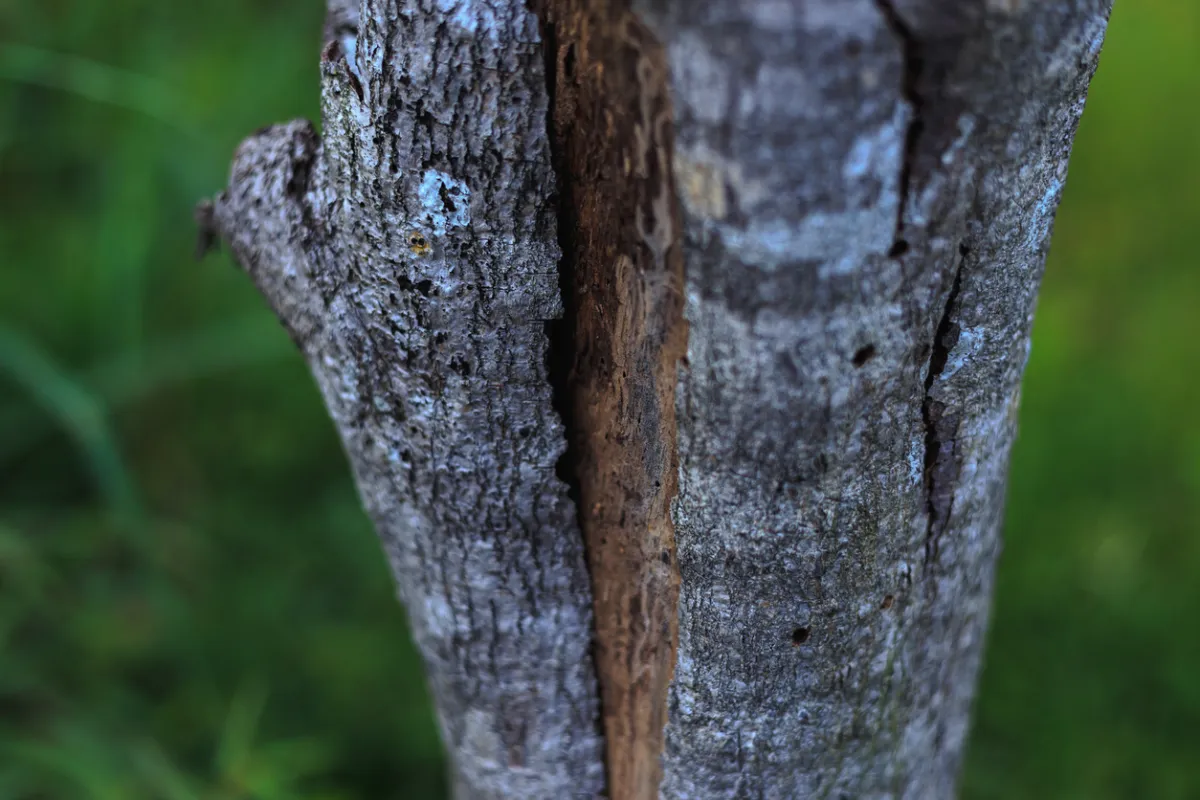
- Bark Cracking or Peeling: This is an advanced warning sign. Vertical cracks may form due to sudden temperature shifts (frost cracks) or internal pressure from growth abnormalities. Extensive, loose, or peeling bark in an area where it should be smooth can indicate tissue death underneath due to sun scald or fungal infection. Additionally, fungi growing at the base or on the trunk can signal internal decay or stress.
- Dry Twigs and Dieback: Inspecting the ends of branches for dry, brittle twigs with no buds is a key step in diagnosing tree health. Dieback starts at the ends of the branches and progresses inward, often creating the classic “stag-horn” appearance on the upper canopy. Dead branches should also be removed as part of stress management to maintain tree health and prevent further damage.
Environmental Conditions That Lead to Stress
Many of the most severe forms of stress on trees originate not from pests or disease, but from the immediate environment. Recognizing these abiotic factors is essential for providing preventative tree care.
To reduce the impact of environmental stressors, homeowners should consider preventative measures such as proper watering, mulching, and timely pruning.
The Impact of Drought Stress in Trees
Drought is perhaps the single most common cause of stress in urban and suburban environments. Water stress is the physiological response of trees to inadequate soil moisture, often resulting from prolonged dry conditions. Drought stress in trees occurs when the tree loses more water through transpiration than its roots can absorb from the soil. Even short periods of drought can severely impact vulnerable trees.
Symptoms include the aforementioned wilting and leaf scorch, but prolonged drought stress can cause irreversible root damage and tree death. Implementing proper watering practices is essential to prevent drought-related decline and maintain overall tree health.
Temperature Extremes
Trees are highly sensitive to sudden and extreme temperature fluctuations.
- Heat Stress: High temperatures can cause the rapid evaporation of water from leaves, leading to severe scorch and sometimes sun scald on bark, especially on younger or thin-barked trees. The difference between heat stress vs cold damage in trees is primarily the resulting tissue injury. Heat stress tends to cause browning or bleaching of the leaf surface, and these symptoms can worsen as temperatures rise during the late growing season.
- Cold Damage: Late spring frosts can damage newly emerging buds and leaves, known as “frost pockets.” Conversely, severe winter cold can lead to frost cracks in the bark, creating entry points for pests and pathogens. Harsh winter winds can further exacerbate winter injury and desiccation.
Soil Compaction and Root Suffocation
One of the most insidious threats to urban tree health is soil compaction and root suffocation. Tree roots require oxygen to function properly and absorb water and nutrients.
- Compaction: When heavy equipment, construction traffic, or even constant foot traffic result in compacted soils, the beneficial air pockets are eliminated. Compacted soils impede the movement of water and gas, restrict root growth, and prevent the roots from accessing essential oxygen.
- Suffocation: This process leads to root suffocation. Stressed roots are unable to absorb water efficiently, leading to drought symptoms even when the soil appears moist. This is a chronic stressor that often requires specialized deep-root aeration techniques to reverse.
Maintaining soil health through regular aeration and the addition of organic amendments is essential for supporting tree vitality and preventing stress.
Soil and Water Imbalances
While environmental extremes are significant, the daily soil conditions and the way a tree is watered are often the true determinants of its long-term health, with waterlogged soils posing a risk due to poor drainage or excessive rainfall. How to save a stressed tree often starts by correcting these fundamental imbalances.
During the rainy season, the likelihood of waterlogged soils and related stress symptoms increases, so monitoring soil moisture is especially important.
The Dangers of Under-watering and Over-watering
Both extremes of moisture—under-watering or over-watering—can cause stress symptoms like drooping leaves or root decay.
- Under-watering: Causes the visible signs of drought stress (wilting, scorching). The tree’s system shuts down to conserve energy. A new tree is especially vulnerable to moisture imbalances, as its roots are not yet established and it can quickly suffer from a lack of water.
- Over-watering: Poor drainage, heavy clay soils, or excessive irrigation can be just as damaging. A newly planted tree is at high risk for root decay if the soil remains saturated, since its roots need oxygen to establish properly. Saturated soil leads to anaerobic (oxygen-free) conditions, causing root decay. The symptoms of root decay can paradoxically mimic drought stress above ground, as the damaged roots cannot absorb water, even if it is abundant.
The Role of Nutrient Deficiencies
The soil composition dictates the availability of nutrients. Poor drainage, compacted soil, or nutrient deficiencies impact overall tree health by starving the tree of the building blocks it needs.
- Nitrogen: Deficiency causes pale green or yellowing of older leaves, as the tree redirects limited nitrogen to new growth.
- Iron/Manganese: Deficiencies often cause chlorosis in the newest leaves first, especially in high pH (alkaline) soils common in urban settings. Even if the nutrient is present, if the pH is too high, the tree cannot absorb it. Symptoms of iron or manganese deficiency may be more pronounced in some trees compared to other trees nearby, depending on species and soil conditions.
Pest and Disease Stress Indicators
Once a tree is weakened by abiotic stress (environmental or soil issues), it becomes highly susceptible to biotic stressors—pests and diseases. These biological agents often exploit the tree’s lowered defenses, and their symptoms can sometimes mimic or exacerbate other signs of tree stress.
- Fungal infections: Fungi can attack stressed trees, leading to symptoms like leaf spots, cankers, or dieback. Tree fungus is a common cause of leaf spots and decay, especially after rainy conditions, and may require prompt treatment to prevent further damage.
Fire blight is another serious concern—a bacterial disease that can cause rapid decline and even death in susceptible fruit and ornamental tree species.
Distinguishing Pests from Other Stressors
It’s crucial to understand how insect infestations or fungal infections can mimic other stress symptoms. For example, the browning caused by a fungal leaf spot might initially look like leaf scorch from drought. Most trees can exhibit similar stress symptoms regardless of the underlying cause, making an accurate diagnosis essential. The key to accurate diagnosis is looking for the organism itself or its specific signature.
Look for visual clues that confirm a biotic issue:
- Insects: Look for specific patterns of feeding damage (skeletonized leaves, curled edges), bore holes (small, perfectly round holes in the bark indicating borers), or the presence of webs, scale insects (small, immobile bumps), or sticky residue (honeydew) left by sap-sucking insects like aphids.
- Fungal Infections (Diseases): Signs include cankers (sunken, dead areas on branches or trunks), fungal growth or conks (mushrooms) on the trunk or roots, powdery mildew on leaves, or distinct spots or lesions on the foliage.
- The Vicious Cycle: Explain how weakened trees are more vulnerable to secondary infestations. A drought-stressed tree lacks the energy to produce defensive chemicals (like sap) to repel borers. The borers then tunnel and girdle the tree, compounding the stress and sealing the tree’s fate.
The Importance of Professional Diagnosis
Treating a pest or disease without knowing the specific culprit is often ineffective and can waste resources or, worse, damage the tree further. A certified arborist can take samples (e.g., leaf or bark tissue) and submit them for lab analysis to confirm the pathogen or pest, allowing for a precise and targeted treatment plan, which is key to successful tree restoration and treatment services.
Physical and Mechanical Stress Factors
The world of construction, landscaping, and general human activity presents numerous opportunities for physical damage that translate into significant tree stress. These are often sudden, localized stressors that are entirely preventable. Evergreen trees are particularly vulnerable to damage from lawn equipment such as mowers and string trimmers, and they should not be over-manicured to avoid unnecessary stress.
Bark Injury and Nutrient Flow Disruption
The bark acts as the tree’s shield. Directly beneath it is the cambium layer, which contains the phloem (transports sugars down) and xylem (transports water and nutrients up). Damage to this area—even minor—disrupts nutrient flow.
- Lawn Mower and String Trimmer Injury: A severe and common problem, especially for younger trees. Repeatedly nicking the bark with a lawnmower or string trimmer can effectively “girdle” the tree, cutting off the phloem layer. This prevents sugars from reaching the roots, starving them and eventually killing the tree.
- Signs of Mechanical Damage: Look for oozing sap (a tree’s defense reaction to injury), deep horizontal or vertical cracks, or leaning, which may indicate recent root disturbance or wind throw.
Protecting Root Zones
The root zone is often overlooked but is arguably the most sensitive part of the tree. The critical feeder roots extend far beyond the drip line (the edge of the canopy).
- Construction Work: Any activity that trenches, grades, or stockpiles soil near a tree can sever major roots or cause massive soil compaction. Damage to the structural roots is non-reversible and drastically increases the risk of tree failure.
Human-Caused Damage and Improper Care
Beyond accidental mechanical damage, intentional actions—or inactions—rooted in poor knowledge of arboriculture can be the primary cause of tree decline. Failing to properly plant trees by neglecting best practices and correct techniques can lead to long-term stress and poor tree health. This type of stress is entirely within the human sphere of control.
Improper Planting and Transplant Shock
Human-caused damage, such as improper planting, construction injuries, and severe splits, can cause significant tree stress and impact tree health. The initial planting phase is critical.
- Improper Planting Depth: Planting too deep is one of the most common mistakes, leading to a slow suffocation of the root flare (the area where the trunk meets the roots). This is a guaranteed path to chronic stress.
- Transplant Shock: Trees, especially newly planted trees, require proper care to prevent transplant shock and ensure they thrive. Transplant shock is the general decline exhibited by a tree after being moved, largely due to root loss. Proper aftercare, including vigilant moisture management, is essential to minimize this stress.
Incorrect Maintenance Practices
Improper tree care, including over-watering and under-watering, can cause tree stress and impact tree health, as discussed previously. However, incorrect pruning is another significant factor.
- Topping: Cutting back large branches to stubs—known as “topping”—creates numerous entry points for decay and forces the tree to produce a dense flush of weak, poorly attached growth (water sprouts), significantly elevating the long-term risk of branch failure.
- Lack of Maintenance: Regular maintenance, including proper pruning and watering, is essential for keeping trees healthy and preventing tree stress. Pruning away dead or diseased wood removes potential pathogen entry points and improves air circulation, bolstering the tree’s natural defenses.
Seasonal Stress Patterns and Weather Extremes
Trees are synchronized to the rhythm of the seasons, but modern urban environments and shifting weather patterns often disrupt this natural cycle, leading to intensified environmental stress on trees.
Unique Seasonal Risks
Each season presents unique stress risks that contribute to chronic decline:
- Winter: Salt spray from roads can desiccate evergreen foliage and poison root systems. Rapid freezing and thawing cycles can cause frost cracks in trunks.
- Spring: Late frosts can damage tender, new growth (as mentioned). Conversely, a sudden, hot spring can cause rapid water loss before the root system has fully awakened.
- Summer: Prolonged drought stress and intense heat are the primary summer threats, leading to widespread leaf scorch and wilting.
- Autumn: If watering is stopped too early, the tree may enter winter poorly hydrated, leading to “winter burn” on evergreens when the ground is frozen.
When to Seek a Professional Assessment
While diligent homeowners can recognize the early symptoms of tree decline, many issues—especially those relating to the root system, internal decay, or pest identification—require specialized knowledge and tools. Knowing when to transition from simple observation to seeking a professional is vital for the tree’s survival.
When to Call an Arborist
You should call an arborist to inspect signs of stress when:
- Symptoms are Chronic: The leaf discoloration, thinning, or dieback persists for more than one growing season.
- Trunk Issues Emerge: You observe deep cracks, large cankers, or the presence of fungal bodies (mushrooms/conks) on the trunk or base.
- Structural Integrity is Questionable: The tree is leaning, has significant dead wood, or is located near a target (home, driveway, play area).
Conclusion
A stressed tree is a liability—a potential hazard that is simultaneously struggling to survive. By paying attention to details like leaf discoloration and wilting, bark cracking or peeling, and the overall health of the canopy, property owners can take immediate, protective action. When the symptoms are complex, chronic, or potentially structural, the best course of action is always to consult a professional.
At Taylor Expert Arborists, we provide the specialized knowledge and equipment necessary for comprehensive professional tree diagnosis and the implementation of customized tree restoration and treatment services. Don’t wait until a tree is visibly dying to seek help. Be proactive, be vigilant, and partner with us to ensure the long-term health and safety of your valuable tree assets.
Contact us today to schedule your comprehensive tree health assessment and secure the health of your landscape.


