


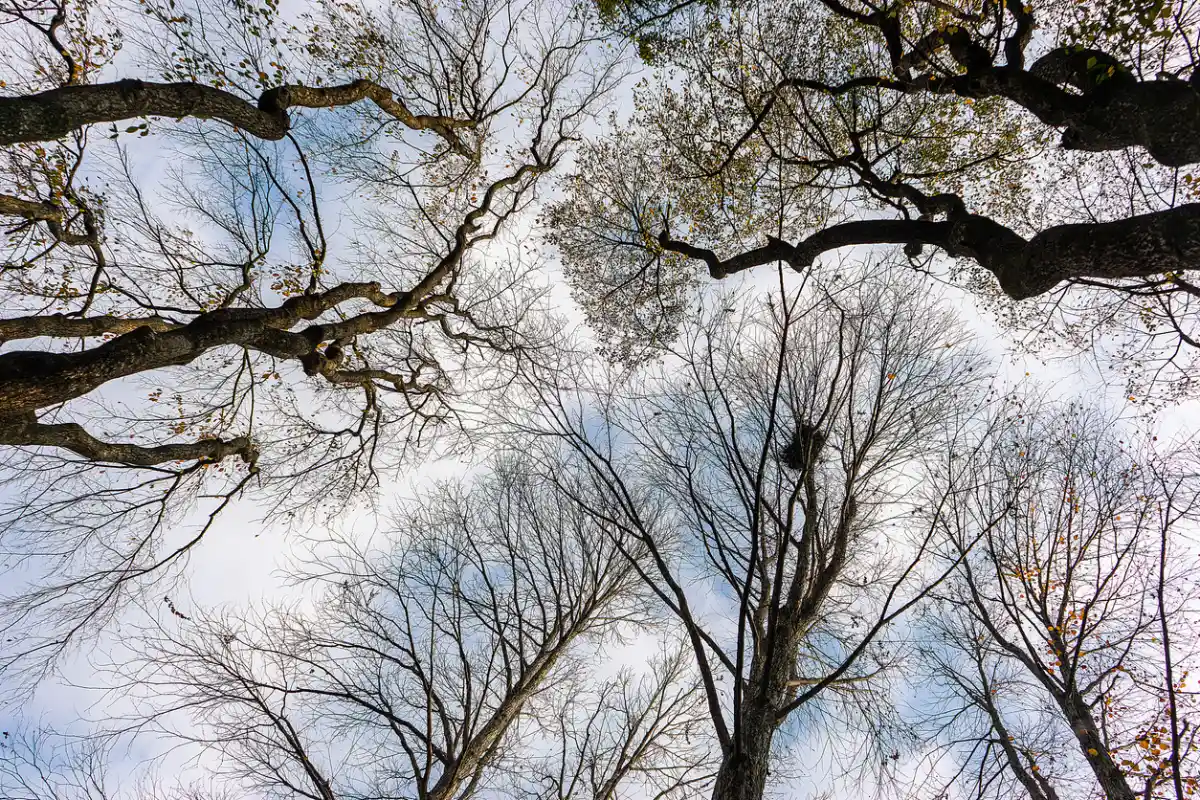
Spring represents a season of dramatic renewal. The snow melts, the days grow longer, and the landscape bursts into vibrant shades of green. You eagerly anticipate the moment your beloved shade trees stretch their branches and unfurl a thick, healthy canopy. But as the weeks pass and neighboring yards bloom, you look out the window and notice a troubling sight. You find yourself asking a frustrating question: why is my tree still bare in spring while everything else is thriving?
A tree standing naked against a warm spring sky raises immediate alarms for any homeowner. You might worry that the tree died over the winter or that a silent disease is tearing through its vascular system. However, a bare canopy does not automatically mean your tree has reached the end of its life. Trees operate on complex biological clocks influenced by weather, soil conditions, root health, and local ecosystems. Understanding exactly why your tree isn’t growing leaves in spring requires a closer look at the environment above and below the soil line.
In this comprehensive guide, we will explore the intricate reasons behind delayed leaf growth in trees, examine the environmental stressors and diseases that cause bud failure, and walk you through the exact steps to diagnose your tree’s health. If you feel overwhelmed by the signs of a struggling landscape, we highly recommend scheduling a comprehensive tree health inspection early in the season to identify and correct underlying issues before they become fatal.
Understanding the Natural Biological Timeline of Trees
Before you assume the worst about a tree not leafing out in spring, you must consider the specific species of the tree in question. Trees do not wake up from winter dormancy all at once. Mother Nature staggering the blooming process ensures that a single late frost does not wipe out an entire forest ecosystem.
Early Bloomers vs. Late Bloomers
Certain trees act as the eager early birds of the forest. Species like maples, birches, and willows respond very quickly to the first consecutive days of warming temperatures. They push out their buds and leaves rapidly, often fully leafing out while the air still feels quite brisk.
Conversely, other species operate with an abundance of caution. Oaks, elms, sycamores, and certain varieties of ash trees purposefully delay their spring growth. These late bloomers wait until the soil warms to a specific temperature and daylight hours extend significantly. If you own an oak tree, delayed leaf growth in trees of this species represents a natural survival mechanism rather than a sign of illness. They wait to ensure that the threat of a killing frost has completely passed before committing their precious energy reserves to leaf production.
The Mechanism of Dormancy
To fully grasp why a tree has no leaves in spring, you must understand how trees survive the winter. In the fall, deciduous trees pull valuable nutrients and starches out of their leaves and store them deep within their trunk and root system. They then seal off the connection to the leaves, allowing them to drop. The tree enters a state of deep sleep called dormancy.
Breaking dormancy requires a specific combination of chilling hours (a set amount of time spent below a certain temperature during winter) and warming hours (a set amount of time spent above a certain temperature in spring). If the winter proved unusually mild, or the spring has remained unusually cool, the biological triggers that tell the tree to produce leaves may simply not have activated yet.
Weather and Environmental Stress Factors
If you have ruled out the natural timeline of the species, you must look at environmental factors. Extreme weather represents one of the most common tree not budding leaves causes. Trees interact directly with their environment, and extreme fluctuations disrupt their growth cycles.
The Devastating Impact of Late Spring Frosts
Sometimes, a tree wakes up exactly when it should. The weather warms up beautifully in early March, prompting the tree to push out delicate, tender new buds. But then, a sudden, brutal late-season freeze sweeps through the region.
These young buds contain high amounts of water. When temperatures plummet below freezing, ice crystals form inside the plant cells, rupturing the cell walls and killing the bud entirely. A few days after the freeze, you might notice the tiny new buds turning black, brown, or shriveled. In this scenario, the tree must dig deep into its secondary energy reserves to produce a completely new set of buds. This process takes time, leading to significant delays in the emergence of a full canopy.
Lingering Effects of Extreme Drought
Trees possess long memories. The environmental stress a tree endures during the scorching heat of July and August directly impacts how it performs the following spring. If your region experienced a severe drought last summer and you did not provide supplemental watering, your tree entered winter in a highly weakened state.
Creating leaves requires an immense amount of energy and water. A tree suffering from severe dehydration prioritizes keeping its core vascular system and root system alive over producing foliage. When spring arrives, the drought-stressed tree may lack the essential stored starches needed to push out new leaves. It may produce a very thin canopy, produce leaves only on the lower branches, or fail to leaf out altogether.
Overwatering and Suffocating Soil Conditions
While drought causes severe damage, too much water proves equally fatal. Spring often brings heavy, relentless rainstorms. If your tree sits in a low-lying area of your yard with poor drainage, the soil around the roots can become completely saturated.
Tree roots must breathe. They require oxygen from the tiny air pockets in the soil to function, absorb nutrients, and metabolize energy. When standing water fills those air pockets, the roots literally drown. Prolonged saturation leads to root rot, a fungal condition that decays the root system. Without a functioning root system to pull water and nutrients up to the branches, the tree cannot support new leaf growth, leaving the canopy bare.
Root Health: The Hidden Culprits Below the Surface
When property owners ask about tree not blooming in spring reasons, they often look up at the branches. However, arborists know that the vast majority of tree health problems originate below the ground. The root system acts as the engine of the tree. If the engine fails, the canopy suffers.
Physical Root Damage from Construction and Landscaping
Have you recently installed a new irrigation system, built a retaining wall, poured a new driveway, or hired a crew to lay down sod? Any digging, trenching, or heavy excavation within the critical root zone of a tree severs its essential feeder roots.
Feeder roots—the tiny, hair-like roots that grow within the top twelve inches of soil—absorb almost all the water and minerals the tree uses. Major construction projects can easily rip away forty to fifty percent of a tree’s root system in a single afternoon. The tree simply cannot support its existing canopy size with a drastically reduced root system. To compensate and survive, the tree will intentionally abort bud production on certain branches, leading to a sparse, uneven, or non-existent spring canopy.
Soil Compaction in Urban Environments
Urban and suburban trees face a silent killer: soil compaction. Years of heavy riding lawnmowers, foot traffic, parked vehicles, and construction equipment pack the soil particles tightly together.
Healthy soil resembles a sponge, full of pores that hold water and oxygen. Compacted soil resembles concrete. The dense, hard earth prevents tree roots from expanding and physically crushes the existing delicate roots. Furthermore, water cannot penetrate compacted soil, meaning rainfall simply runs off the surface instead of soaking down to the roots. Trees struggling in severely compacted soil slowly decline over several years, displaying delayed leafing, smaller leaves, and progressive dieback each spring.
Girdling Roots Choking the Trunk
Sometimes, a tree becomes its own worst enemy. When you plant a tree in a hole that is too small, or in soil that is too compacted to penetrate, the roots begin to grow in a circular pattern around the inside of the planting hole.
As the tree matures, these circular roots thicken and wrap tightly around the base of the trunk. We call these girdling roots. Girdling roots act like a tight rubber band placed around a person’s wrist. As the trunk tries to expand, the girdling root slowly strangles the tree, crushing the phloem and xylem—the critical vascular tissues responsible for transporting water from the roots to the canopy. This gradual strangulation chokes off the branches, resulting in a tree not leafing out in spring.
Common Tree Diseases and Pests That Stop Spring Blooming
Pathogens and insects aggressively target trees in the spring, attempting to feed on the tender new growth or exploit weakened vascular systems. Fending off these attacks drains a tree’s energy, and severe infestations frequently halt leaf production entirely.
Fungal Diseases Attacking Foliage and Buds
Fungal spores thrive in the cool, wet conditions typical of early spring. Several aggressive fungal diseases specifically target new buds and young leaves.
Anthracnose, for example, represents a widespread group of fungal diseases that severely impacts sycamores, oaks, and dogwoods. If a wet spring provides the perfect breeding ground, Anthracnose will attack the expanding buds, causing them to blacken and die before they can fully open. The tree will appear entirely bare for weeks until the weather warms, dries out, and forces the tree to push a secondary, much later flush of leaves.
Verticillium wilt poses a much more lethal threat. This soil-borne fungus enters through the root system and travels up the trunk, actively plugging the vascular tissues. It physically blocks water from reaching the branches. You might notice one entire side of your tree leafing out normally, while the other half remains completely bare and dead—a classic symptom of vascular wilt.
Wood-Boring Insects Disrupting Nutrient Flow
Sap-sucking insects like aphids certainly cause stress, but wood-boring insects deal lethal blows to trees. The Emerald Ash Borer, for instance, has decimated millions of ash trees across the country.
Adult borers lay their eggs on the bark. When the larvae hatch, they chew their way into the tree and feed on the nutrient-rich cambium layer located just beneath the bark. As the larvae feed, they carve winding, S-shaped galleries that physically sever the flow of water and nutrients between the roots and the canopy. A tree heavily infested with borers will exhibit severe canopy thinning, dead branches at the top of the crown, and a complete failure to produce leaves in the spring.
Defoliating Caterpillars and Webworms
In some cases, the tree actually did grow leaves in the spring, but a massive pest infestation consumed them before you even noticed. Defoliating insects, such as spongy moths (formerly gypsy moths), tent caterpillars, and fall webworms, hatch in the spring and immediately begin devouring the tender new foliage.
A severe caterpillar infestation can strip a mature oak tree completely bare in a matter of days. While healthy deciduous trees can usually survive one defoliation event by pushing out a second set of leaves later in the summer, repeated defoliation year after year drains the tree’s energy reserves entirely, eventually leading to the tree’s death.
Human Error: How Improper Care Leads to Bare Branches
Often, the reason a tree fails to thrive traces back to well-intentioned but improper landscape maintenance. Trees require specific care, and simple mistakes can cause catastrophic damage to their growth cycles.
The Dangers of Improper Pruning and Topping
Pruning represents both an art and a science. When performed correctly by a certified arborist, pruning improves structure, removes dead wood, and increases airflow. When performed incorrectly, it destroys the tree.
Some property owners practice “topping”—the indiscriminate removal of the entire top canopy of the tree, leaving only large, stubby branches. Topping starves the tree. By removing all the leaf-bearing branches, you remove the tree’s ability to photosynthesize and feed itself. The tree reacts with panic, either failing to grow leaves entirely the next spring or pushing out weak, rapid, ugly water sprouts in a desperate attempt to survive.
Additionally, pruning trees at the wrong time of year creates vulnerability. Pruning a tree just as it begins pushing spring growth drains its energy heavily. You should generally prune deciduous trees during their deep winter dormancy.
Chemical Injury from Herbicides and Fertilizers
Maintaining a pristine, weed-free lawn often comes at the expense of tree health. Broadleaf weed killers (herbicides) applied to the grass do not distinguish between a dandelion and an oak tree.
Because tree roots extend far beyond the drip line of the canopy and grow directly intermingled with turf grass roots, the tree absorbs the chemicals you spray on your lawn. Chemical injury twists, cups, and scorches new tree leaves, and heavy applications can prevent bud break altogether. Similarly, over-applying synthetic, high-nitrogen lawn fertilizers burns delicate tree feeder roots, limiting water uptake and causing severe canopy stress.
Improper Planting Depth
If you recently planted a new sapling and it fails to leaf out the following spring, check the planting depth. Planting a tree too deep represents the number one cause of young tree failure.
Every tree has a root flare—the widened area at the base of the trunk where it transitions into the root system. This root flare must remain visible above the soil line. If you bury the root flare under soil or a thick mountain of mulch (often called a “mulch volcano”), you trap moisture against the trunk. The bark slowly rots, pathogens enter the stem, and the root system suffocates from lack of oxygen. The young tree suffocates and dies within the first few seasons.
Diagnostic Steps: How to Tell if Your Tree is Dead, Dormant, or Dying
Staring at a bare tree generates anxiety, but you can perform a few simple, hands-on tests to determine if the tree has died or simply delayed its growth.
Step One: Performing the Scratch Test
The scratch test provides the fastest and most reliable way to check for life in a dormant tree. You need to examine the cambium layer—the thin layer of tissue located immediately beneath the outer bark.
Take a small pocket knife or use your thumbnail, and gently scratch away a tiny portion of the outer bark on a small twig or branch.
- Green and Moist: If the tissue underneath appears bright green, plump, and feels slightly moist to the touch, the branch is alive. The tree is simply dormant or delayed and still possesses the energy to produce leaves.
- Brown and Brittle: If the tissue underneath appears brown, dry, and flakes away easily, that specific branch is dead.
Perform the scratch test in several different locations around the tree. A single dead twig does not mean the entire tree has died, but if you find dead tissue on multiple large branches across the entire canopy, the tree faces a severe, potentially fatal problem.
Step Two: Evaluating Branch Flexibility
Living wood holds moisture, which gives it flexibility. Dead wood dries out completely and becomes rigid.
Reach up and gently bend a small twig at the end of a branch. A living twig will bend easily like a green bow, curving without breaking. A dead twig will exhibit no flexibility whatsoever; it will immediately snap cleanly in half with a sharp cracking sound. If every branch you test snaps off effortlessly, the tree has likely succumbed to environmental stress or disease.
Step Three: Inspecting the Buds
Take a close look at the tips of the branches. Even in deep winter, a healthy deciduous tree sets its buds for the following spring.
- Examine the buds closely. Do they look plump, firm, and tightly closed? If so, the tree remains healthy and waits for the right environmental cues to open.
- Do the buds look shriveled, blackened, or completely missing? If you find dried out, crumbling buds, the tree likely suffered severe winter damage, frostbite, or a fungal attack that destroyed its spring foliage before it could emerge.
Step Four: Inspecting the Trunk and Base
Finally, examine the main structure of the tree. Look closely at the trunk and the root flare for signs of advanced decay.
- Do you see large sections of bark cracking, peeling, or sloughing off the trunk, exposing bare, smooth wood underneath?
- Do you spot small, D-shaped holes bored into the bark?
- Do you see any fungal growth, such as large, shelf-like mushrooms (conks) growing directly out of the wood near the base of the tree?
The presence of peeling bark, borer exit holes, or fungal conks usually indicates that the tree has experienced severe internal vascular failure or extensive heartwood rot. Trees displaying these symptoms rarely recover and often require professional removal to prevent property damage.
When to Call a Professional Arborist
Waiting for a stubborn tree to bloom requires patience. If you own an oak or an elm, do not panic if the tree remains bare through April. However, if late May arrives, the surrounding landscape looks lush and green, and your tree still resembles a winter skeleton, you have a serious problem on your hands.
Attempting to diagnose complex soil pathogens, hidden pest infestations, or structural root damage without training often leads to improper treatments. Applying the wrong fertilizer or pesticide can accelerate the tree’s decline rather than cure it. When a tree fails to thrive, it requires the trained eye of a professional who understands the localized soil chemistry, regional pest pressures, and specific biological needs of your tree species.
Conclusion
A bare canopy in the springtime causes understandable concern for any property owner who values their landscape. While late-blooming species and unusual weather patterns frequently cause delayed leaf growth in trees, a bare tree can also serve as a glaring warning sign of severe underlying distress. Factors ranging from sudden late frosts and hidden root compaction to aggressive fungal diseases and improper pruning practices all answer the complex question of why your tree isn’t growing leaves in spring.
By familiarizing yourself with the natural timeline of your specific tree species, monitoring the health of your soil, and conducting simple diagnostic checks like the scratch test, you can stay ahead of major landscape disasters. However, you do not have to tackle tree health issues alone.
If you have performed the scratch test, monitored the weather, and still find yourself staring at lifeless, brittle branches, it is time to bring in the experts. At Taylor Expert Arborists, our team possesses the deep horticultural knowledge and advanced diagnostic tools necessary to uncover the root cause of your tree’s distress. We evaluate soil conditions, identify hidden pest infestations, and develop customized treatment plans to restore the vigor of your landscape. Do not wait until a declining tree becomes a dangerous hazard. Contact our certified tree care team today to schedule your consultation and let us help you bring your trees back to life.


