

Losing a mature, beloved tree from your landscape is always a poignant experience. Whether a fierce storm brought it down, a silent disease hollowed it out, or it simply reached the end of its natural lifespan, a space in your yard leaves a noticeable void. Naturally, your first instinct is to restore your property’s beauty by replacing it. However, before reaching for your shovel, a vital question arises: Is it advisable to plant a new tree in the exact location where another recently perished?
The short answer is yes, you can. However, the long answer requires careful consideration, soil preparation, and a deep understanding of your landscape’s history. Before making any new investments in your landscape, we highly recommend scheduling a comprehensive tree health inspection to evaluate your soil health and identify any lingering subterranean threats.
In this comprehensive guide, we will explore everything you need to know about replanting a tree after removal. We will cover the lingering effects of soil pathogens, the challenges of old root systems, the chemistry of stump decomposition, and the expert techniques needed to ensure your new tree thrives for generations.
Can You Replant a Tree in the Same Hole?
Homeowners frequently ask arborists, ” Can you replant a tree in the same hole? While it may seem convenient to reuse the existing void, arborists strongly advise against it.
First, as mentioned earlier, the exact spot holds the highest concentration of old roots, potential pathogens, and depleted nutrients. The old tree spent decades extracting specific minerals and nutrients from that exact cubic yard of soil. Consequently, the soil directly beneath the old trunk is completely exhausted.
Second, the soil biology directly inside the old hole remains heavily skewed toward the decomposition of the old root mass, rather than supporting new, vibrant growth. You want your new tree to focus its energy on establishing a strong root system, not fighting through a graveyard of decaying wood and localized fungal blooms.
Instead of using the same hole, professionals recommend employing the “Three-Foot Rule.” Whenever possible, shift your planting site at least three to five feet away from the original trunk location. This small adjustment moves the new root ball away from the densest part of the old root system, gives the new tree access to fresher, more nutrient-rich soil, and slightly distances it from concentrated, localized pathogens.
If property lines or landscape designs force you to use the same spot, you must completely excavate the old soil, remove as much of the old root mass as humanly possible, and replace the old dirt with high-quality, nutrient-dense topsoil.
Crucial First Steps: Understanding the Causes of Tree Mortality
You cannot successfully introduce new life into a space without first understanding what extinguished the old. Identifying the primary cause of your previous tree’s decline is the most critical step in this process. If the underlying issue remains unaddressed, your new tree will likely suffer the same fate. Understanding the causes of tree death allows for informed decisions regarding species selection and soil remediation.
Soil Pathogens and Fungal Diseases
Many homeowners mistakenly believe that removing a diseased tree also eliminates the disease. Unfortunately, many aggressive tree pathogens are soil-borne and can remain viable for years after the host tree is gone.
Consider Armillaria root rot, often called “oak root fungus.” This devastating pathogen spreads through the soil via dark, shoestring-like structures called rhizomorphs. Even after you cut down the infected tree and grind the stump, Armillaria continues to live in the decaying root system left underground. If you plant a susceptible sapling in that exact location, the fungus will eagerly attack the fresh, vulnerable roots.
Similarly, Verticillium wilt acts as a silent assassin. This soil-borne fungus invades a tree’s roots and travels up through the vascular system, essentially clogging the tree’s internal plumbing and preventing water from reaching the canopy. Verticillium can remain dormant in the soil for over a decade. If soil pathogens caused the death of your previous tree, planting a tree in the same spot requires you to choose a replacement species that boasts a natural resistance to that specific fungus.
Aggressive Pest Infestations
Insects also play a massive role in tree mortality. Wood-boring insects, such as the notorious Emerald Ash Borer or the Asian Longhorned Beetle, destroy the internal structure of trees. While these pests generally leave the immediate area once the food source (the tree) disappears, certain life stages of pests, like pupae or larvae, might temporarily remain in the surrounding debris.
More concerning are soil-dwelling pests like root-knot nematodes. These microscopic roundworms attack tree roots, causing them to form galls and severely stunting the tree’s ability to absorb water and nutrients. If nematodes ruined your last tree, simply dropping a new tree into the same soil guarantees failure. You must treat the soil or select highly resistant plant varieties before moving forward.
Environmental Stress and Soil Factors
Sometimes, a tree dies simply because it lived in the wrong place. Environmental factors contribute heavily to tree decline. Did the previous tree sit in a low-lying area that constantly floods during heavy rains? Most tree roots need oxygen to survive, and standing water literally drowns them. Conversely, did the tree die because the soil lacked essential nutrients, or because the soil pH proved far too alkaline or acidic for that specific species?
If poor drainage, extreme soil compaction, or severe nutrient deficiencies killed your tree, you must actively correct these environmental conditions before replanting. Otherwise, the hostile environment will simply claim another victim.
The Reality of Replanting a Tree After Removal
Once you identify the cause of death, you must face the physical reality of the planting site. Replanting a tree after removal involves dealing with the hidden architecture the old tree left behind. You are not starting with a blank canvas; you are working within an altered subterranean environment.
Dealing with the Remaining Root System
When a tree removal company cuts down a mature tree, they remove the trunk and the canopy. However, the tree’s massive root system remains firmly anchored in the earth. A tree’s root system often extends far beyond the drip line of its canopy. These thick, woody roots create a dense underground web.
If you attempt to plant a new tree in this exact location, you will immediately strike old roots with your shovel. These existing roots physically block the new tree’s roots from expanding. Furthermore, as the old root system slowly decays over several years, it creates an unpredictable environment. The decaying wood can alter the soil structure, create unwanted air pockets, and encourage the growth of certain decay fungi that might inadvertently stress your new, young tree.
Soil Compaction and Alteration
The process of removing a large tree almost always causes severe soil compaction. Heavy equipment, such as bucket trucks, stump grinders, and skid steers, roll over the lawn. The foot traffic of the tree removal crew also presses down the soil. Compacted soil lacks pore space, meaning it cannot hold the necessary oxygen and water that new roots desperately need to establish themselves. Before planting, you must actively aerate and rehabilitate this compacted earth to restore its natural porosity.
Planting a Tree After Stump Removal: What You Need to Know
Most homeowners opt to grind the stump after cutting down a tree. While stump grinding vastly improves the visual appeal of your yard, it introduces an entirely new set of biological challenges. Planting a tree after stump removal requires you to understand the chemical reactions occurring in the ground.
The Stump Grinding Process
A stump grinder features a massive rotating wheel with carbide teeth that literally chews the wood into thousands of tiny chips, mixing them with the surrounding dirt. The machine typically grinds the stump down to about six to twelve inches below the soil grade. However, it leaves behind a massive pile of sawdust and woodchips filling the newly created crater.
The Danger of the Carbon-to-Nitrogen Ratio
This mixture of woodchips and soil creates a severe problem known as nitrogen tie-up. Wood contains massive amounts of carbon but very little nitrogen. As soil microbes arrive to break down and decompose this sudden influx of woody debris, they require nitrogen for energy. Because the woodchips lack nitrogen, the microbes steal all the available nitrogen from the surrounding soil.
If you plant a young tree directly into this woodchip-filled hole, the tree will enter a fierce competition with the soil microbes for nitrogen—and the tree will lose. Nitrogen represents an essential building block for chlorophyll and leafy growth. A tree planted in grinding debris will quickly show signs of nitrogen starvation: its leaves will turn pale yellow, its growth will stunt completely, and it will eventually decline.
Rehabilitating the Stump Site
To successfully plant near a ground stump, you must first manage the woodchips. Use a shovel to excavate the majority of the grinding debris from the hole. You can repurpose these woodchips elsewhere in your yard as a surface mulch, provided the old tree did not die from a transmissible disease.
Once you clear the hole, fill it with a mixture of fresh topsoil and rich compost. This restores the physical structure of the soil and replenishes the vital nutrients the old tree and the stump-grinding process stripped away.
Essential Tree Replacement Planting Tips
Setting your new tree up for a lifetime of success requires more than just digging a hole and dropping it in. Proper technique dictates everything. Follow these essential tree replacement planting tips to guarantee a smooth transition for your new landscape addition.
Choose the Right Replacement Species
Never replace a dead tree with the exact same species, especially if disease or pests caused the original tree’s death. This practice, known as monoculture replacement, simply sets the table for the pathogen to strike again. Instead, prioritize diversification.
Select a tree species that naturally resists the diseases prevalent in your area. Consider the mature size of the new tree, its sunlight requirements, and its soil preferences. Native trees often present the best option, as they have evolved to thrive in your specific local climate and local soil conditions, making them naturally hardier and more resilient against local pests.
Prepare the Soil Correctly
Before planting, conduct a basic soil test to determine the pH and nutrient levels of your yard. If the soil lacks organic matter, amend the backfill dirt with a high-quality compost. However, avoid over-amending the soil in the planting hole. If the soil inside the hole feels too rich compared to the surrounding native soil, the tree’s roots will refuse to leave the hole, creating a “teacup effect” where the roots circle endlessly and eventually strangle the tree. Aim for a mixture of about 80% native soil and 20% compost.
Dig the Right-Sized Hole
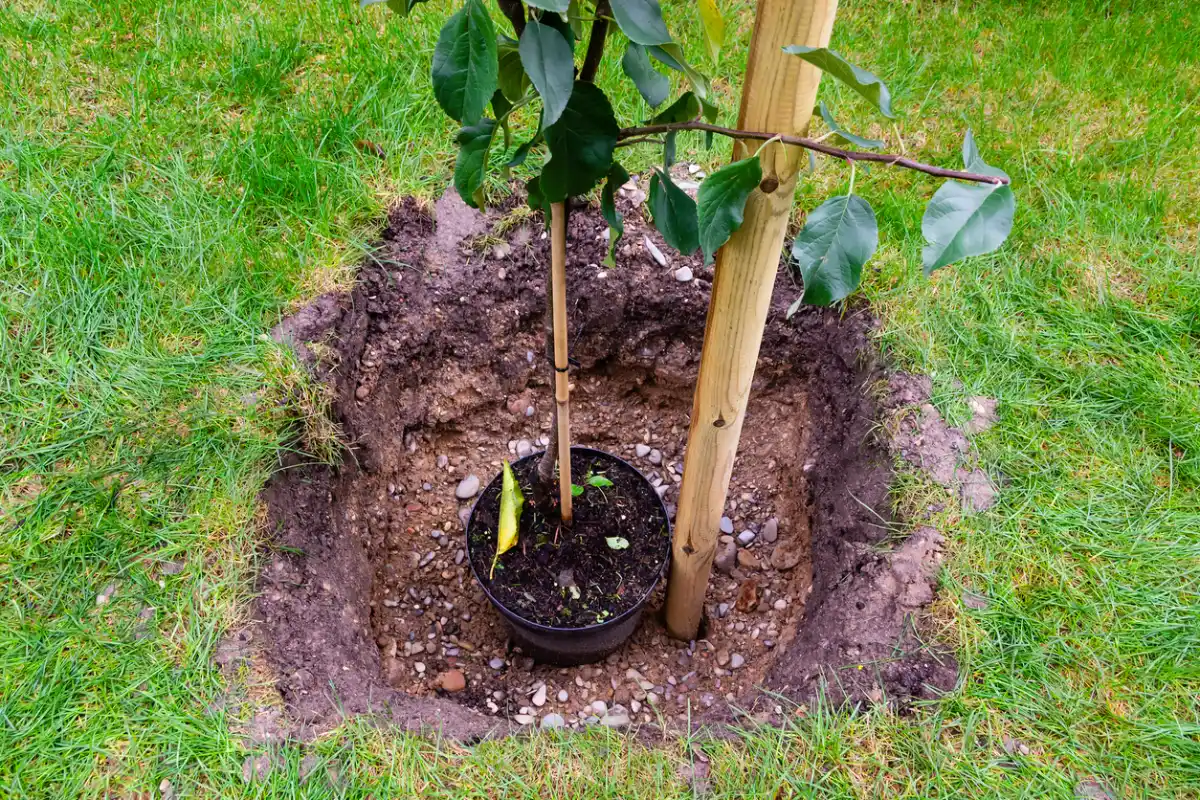
The most common mistake homeowners make involves digging a hole that is far too deep and much too narrow. Your planting hole should look like a shallow, wide saucer, not a deep well.
Dig the hole at least two to three times wider than the tree’s root ball. This wide space loosens the surrounding soil, allowing the delicate new feeder roots to easily push outward and establish a strong anchor. However, never dig the hole deeper than the root ball itself. The tree must sit on firm, undisturbed soil to prevent it from settling and sinking over time.
Crucially, you must locate the tree’s root flare—the widened area at the base of the trunk where it transitions into the root system. The root flare must always remain visible slightly above the final soil grade. Planting a tree too deeply suffocates the roots, rots the trunk, and serves as a leading cause of premature tree death.
Proper Watering and Mulching Techniques
Newly planted trees suffer from severe transplant shock and require consistent moisture to recover. Water the tree deeply and thoroughly immediately after planting to collapse any hidden air pockets in the soil. For the first few months, provide the tree with slow, deep waterings rather than frequent, shallow sprinkles. Deep watering encourages the roots to grow downward, seeking moisture, which makes the tree more drought-resistant in the future.
Apply a two-to-three-inch layer of organic mulch around the base of the tree to conserve soil moisture, regulate soil temperature, and suppress competing weeds. However, always keep the mulch pulled back at least three inches away from the actual trunk. Piling mulch against the bark creates a “mulch volcano,” which traps moisture against the wood, invites fungal decay, and provides a hiding place for trunk-boring insects.
Planting a Tree in the Same Spot: Step-by-Step Guide
If you have evaluated the site, understood the risks, and decided that you must plant near the old location, follow this disciplined step-by-step approach to maximize your chances of success.
- Wait and Observe: If you have the patience, allow the site to rest for a full year after removing the old tree. This resting period allows the soil biology to begin breaking down the old root system naturally and allows the earth to settle.
- Clear the Area: Remove all visible sawdust, woodchips, and debris left over from the stump grinding process. Excavate the immediate area to ensure you are starting with a clean slate.
- Chop Through Old Roots: As you dig your new, wide hole, you will undoubtedly encounter old roots. Use a sharp axe, loppers, or a reciprocating saw to cleanly cut through these old roots. Remove the cut sections to make physical room for your new tree’s root ball.
- Inspect Soil Drainage: Before planting, fill the empty hole with water and watch how long it takes to drain. If the water remains standing for hours, you have a severe drainage problem that you must address—perhaps by breaking through a hardpan layer of clay—before planting.
- Plant with Precision: Set the tree into the hole, ensuring the root flare sits proudly above the soil line. Backfill the hole gently with your prepared soil mix, tamping it down lightly to remove air pockets without severely compacting the dirt.
- Monitor Vigorously: A tree planted near an old tree site requires extra vigilance. Monitor the leaves for signs of stress, yellowing, or wilting, and maintain a strict watering schedule during the first two growing seasons.
When to Call the Professionals
Replanting a tree successfully involves complex biological and environmental variables. While a dedicated homeowner can manage small saplings, dealing with the aftermath of large, diseased trees often requires expert intervention.
If your previous tree died from an unknown cause, if you suspect aggressive soil-borne pathogens like Armillaria, or if you simply want to protect your financial investment in new landscaping, bringing in a certified arborist is the smartest move you can make. Professionals possess the tools to test the soil, identify hidden diseases, and recommend the exact tree species guaranteed to thrive in your unique microclimate. They can also handle the heavy lifting of proper soil remediation and precise planting techniques.
Conclusion
So, can you plant a tree where another died? Absolutely, but it requires patience, preparation, and respect for the biological realities of your soil. By taking the time to identify why the previous tree failed, carefully managing the old root system and stump debris, and following expert planting techniques, you can successfully break the cycle of tree mortality. Remember to avoid planting in the same hole, choose disease-resistant replacement species, and prioritize proper depth and watering above all else.
Navigating the complexities of soil health and tree pathology doesn’t have to be a burden you carry alone. If you are ready to breathe new life into your landscape and want to ensure your next tree thrives for decades to come, we are here to help. Please contact our certified arborists at Taylor Expert Arborists today. We will gladly evaluate your site, provide tailored recommendations, and handle the entire replanting process with the expertise your property deserves.


