


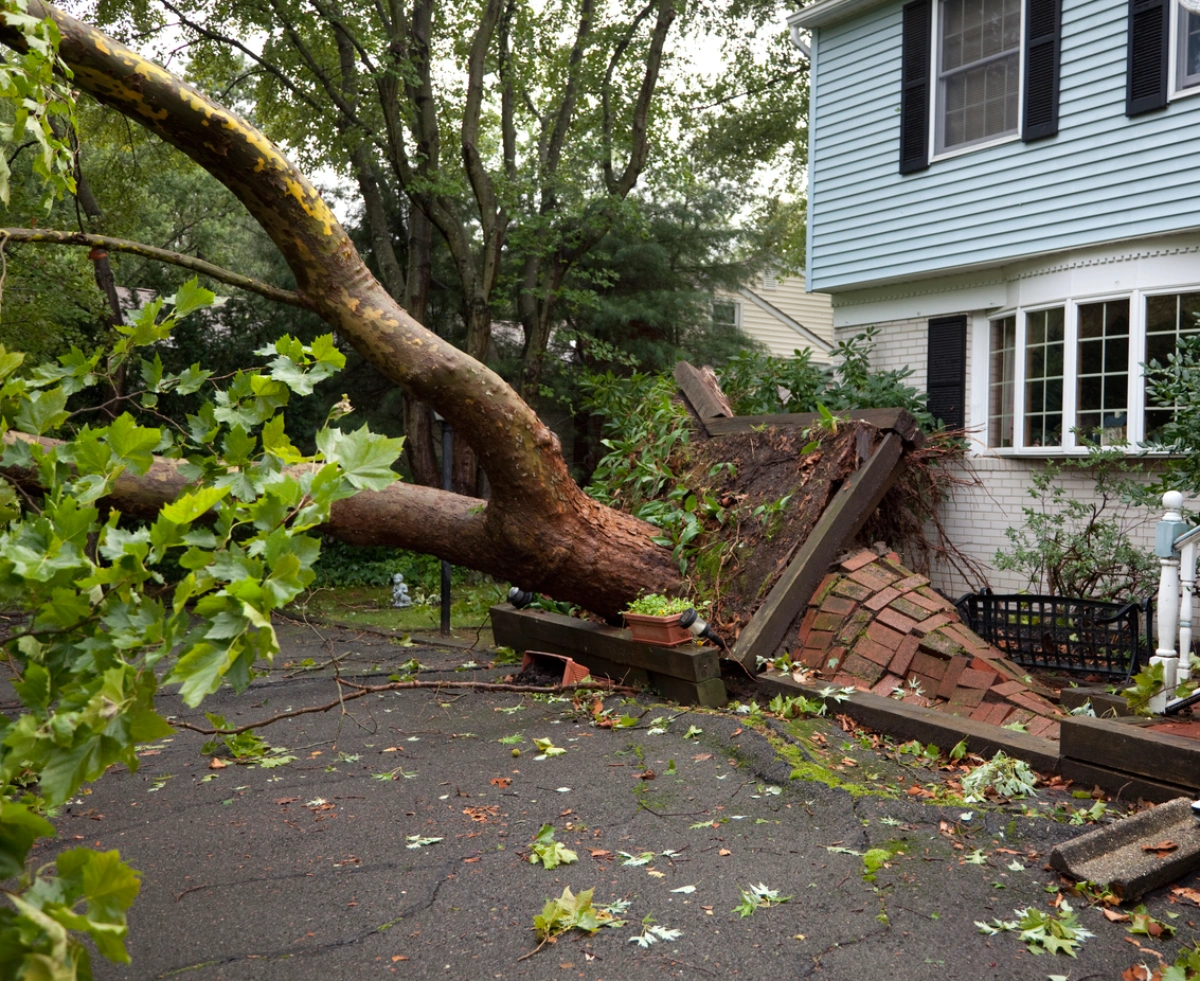
Waking up to the aftermath of a severe weather event is a stressful experience for any property owner. The howling winds die down, the torrential rain stops, and a look out the window reveals a beautiful, mature landscape in disarray. Branches litter the lawn, and perhaps a massive oak or maple is leaning ominously toward the roof. For anyone currently standing in the yard wondering exactly what to do if a storm damaged my tree, navigating the next steps safely is critical.
To help the community recover safely and effectively, Taylor Expert Arborists offers comprehensive residential tree services designed to address these exact crises. Furthermore, while industry professionals always advocate proactive storm-tree preparation and support systems to mitigate these risks before the clouds gather, Mother Nature often has her own plans.
This extensive guide walks property owners through everything needed to navigate the days and weeks following a severe weather event. Readers will learn how to identify immediate safety hazards, how professionals conduct a thorough assessment of storm-damaged trees, the intricacies of filing an insurance claim for tree damage, and how arborists determine whether a tree can heal or requires complete removal.
Immediate Actions: Prioritizing Human Safety and Property Protection
Before even thinking about grabbing a chainsaw or stepping near a damaged tree, property owners must secure the area. The period immediately following a major weather event represents the most dangerous time for homeowners. Trees and limbs exist under immense physical tension. When a storm disrupts that structural integrity, the wood can behave unpredictably, snapping or rolling with lethal force.
Identifying a Dangerous Tree After a Storm
The priority is always a visual inspection from a safe distance. Do not walk directly under the canopy of a tree that has taken a beating. Instead, use binoculars or simply stand well clear of the potential fall zone. The goal is to identify a dangerous tree after a storm, which typically exhibits several obvious warning signs.
First, examine the root system and the lower trunk. Do newly exposed roots appear on one side of the tree? Does the soil appear to have heaved or cracked, creating a mound near the base? This indicates a root plate failure. The tree has lost its anchor and could fall entirely at any moment, even without a strong breeze.
Next, scan the canopy for large, detached branches that are simply resting on other branches. In the arboriculture industry, professionals call these “widowmakers” for a very good reason. A sudden gust of wind or the natural shifting of the tree can send hundreds of pounds of wood plummeting to the ground silently. If widowmakers are hanging over a driveway, sidewalk, or home, block off the area immediately to keep family members, neighbors, and pets away.
Dealing with Downed Power Lines and Electrical Hazards
The most lethal hazard following a storm involves the intersection of trees and utility lines. If broken tree limbs after a storm are resting on or near power lines, assume those lines are live. Never approach a tree that is touching a power line. Wood, especially wet wood, conducts electricity efficiently.
If a tree has taken down a line, retreat indoors and immediately call the local utility company and emergency services. Do not attempt to clear brush, move limbs, or assess the damage anywhere near the electrical hazard. Utility crews must secure the grid and verify that the lines are de-energized before any emergency tree service after storm operations can safely commence.
Conducting a Preliminary Storm-Damaged Tree Assessment
Once the area is confirmed to be free of immediate, life-threatening electrical hazards, a more detailed, yet still cautious, visual inspection can begin. Understanding the anatomy of tree damage from high winds helps property owners communicate effectively with arborists and insurance companies.
Evaluating the Crown and Canopy Loss
The crown of the tree consists of the leaves and branches extending outward from the main trunk. This is the energy center of the tree, where photosynthesis occurs. When conducting a preliminary assessment, estimate how much of the total canopy the storm stripped away.
A general rule of thumb within arboriculture is the fifty-percent rule. If a tree loses less than fifty percent of its canopy, it generally retains enough foliage to generate the food it needs to survive, heal, and eventually regenerate. If the tree loses more than fifty percent of its crown, its long-term survival prospects plummet. The tree will struggle to produce enough energy, entering a state of rapid decline that invites pests and fungal diseases.
Examining Branch Failures and Bark Damage
Look closely at where the branches broke. Did they snap cleanly in the middle of a limb, or did they tear away from the main trunk? When the wind rips a large branch directly out of the main trunk, it often takes a massive strip of bark with it. Arborists refer to this as a peeling wound.
The bark acts as the tree’s primary defense system against the outside world, much like skin. A large peeling wound exposes the inner sapwood and heartwood directly to the elements, insects, and decay-causing fungi. While trees possess remarkable abilities to seal off small wounds, massive trunk wounds severely compromise the tree’s vascular system.
Inspecting for Torsion and Twisting Damage
Tree damage from high winds does not always manifest as a clean break. High-velocity, swirling winds can grab a dense canopy and physically twist the main trunk. This torsion creates severe internal stress, fracturing the wood fibers vertically along the trunk.
Look for deep, longitudinal cracks running up and down the main stem. The bark might also look buckled or rippled. A twisted trunk represents a catastrophic structural failure. Even if the canopy looks relatively intact, a trunk with torsion cracks has lost its load-bearing capacity and poses a significant hazard.
Can the Tree Be Saved? Understanding Tree Storm Damage Repair
The most common question property owners ask after a weather event is whether their beloved oak, maple, or elm can be saved. For certified arborists, the ultimate goal is tree preservation. Professionals want to save mature trees whenever safely possible, but that desire must be balanced against the reality of structural physics and biological health.
The Role of an Arborist in Storm Damage Inspection
Making the final call on preservation versus removal requires specialized training. An arborist storm damage inspection involves far more than just looking at broken branches. Experts analyze the tree’s species, age, health history, and the surrounding environment.
Some tree species possess incredibly resilient wood that compartmentalizes decay rapidly, allowing them to recover from devastating wounds. Other species, like certain fast-growing maples or poplars, have brittle wood that decays quickly once damaged. During an inspection, professionals evaluate the tree’s specific biological capacity to heal. They also assess the “targets.” If the severely damaged tree stands in the middle of an open field, natural recovery might be an option. If that same tree stands ten feet from a bedroom window, the acceptable risk threshold drops to zero.
Professional Pruning and Wound Management
If a tree is deemed a candidate for preservation, the next step is tree storm damage repair. The foundation of this repair is corrective pruning. Property owners might be tempted to grab a ladder and a chainsaw to clean up the ragged breaks themselves, but improper pruning invariably causes more harm than the storm itself.
When branches tear, they leave jagged, uneven surfaces that hold moisture and provide ideal breeding grounds for fungi. Certified arborists use specialized equipment to make clean, precise cuts just outside the branch collar—the swollen area where the branch meets the trunk. Making the cut at the correct angle and location allows the tree to activate its natural defense mechanisms. The tree will eventually grow “wound wood” over the clean cut, sealing the damage away from healthy tissue.
Years ago, people believed that painting tree wounds with tar or specialized sealants helped them heal. Modern arboricultural science has definitively proven that wound dressings actually trap moisture and actively promote wood rot. A professional arborist will never paint a tree wound, relying instead on making the right cut and letting the tree’s evolutionary biology do the work.
Avoiding the Dangers of Tree Topping
If a storm breaks the entire top out of a tree, inexperienced individuals often suggest simply cutting the rest of the branches back to a uniform length. This practice, known as “topping,” is arguably the most destructive action one can take.
Topping removes the tree’s primary energy source and triggers a panic response. The tree rapidly pushes out dozens of weakly attached, fast-growing shoots—called epicormic sprouts—around the topping cuts. These new branches have incredibly weak structural attachments. Within a few years, as these sprouts grow large and heavy, they become prime candidates to snap off and cause damage during the very next minor windstorm. A certified arborist will utilize crown restoration techniques over several years to safely rebuild the tree’s canopy, completely avoiding the destructive practice of topping.
Implementing Cabling and Bracing Systems
In some instances, a storm might cause a split in a major crotch of the tree where two massive leaders diverge. If the split is minor and the wood is healthy, professionals can sometimes install supplemental support systems.
This process involves drilling through the trunk and installing heavy-duty steel rods to bolt the split together. Specialists then climb high into the canopy to install high-strength steel or synthetic cables between the major branches. These cables restrict the branches’ movement during high winds, preventing them from pulling apart and turning a minor crack into a catastrophic failure. This specialized tree storm damage repair technique requires precise engineering and ongoing maintenance, but it can successfully save magnificent heritage trees that would otherwise require removal.
When to Call for Emergency Tree Service After a Storm
Despite the best preservation efforts, some storm damage simply proves too severe. When a tree suffers catastrophic structural failure, loses its root anchor, or presents a direct, immediate threat to life and property, emergency tree service after storm procedures become absolutely necessary.
Identifying Immediate Threats to Homes and Infrastructure
Property owners should immediately contact Taylor Expert Arborists for an emergency response if any of the following scenarios are observed:
- A tree or large limb has physically impacted a home, garage, or vehicle.
- A tree is visibly leaning toward a structure and the soil around the roots is actively lifting.
- A massive limb is cracked and hanging directly above a high-traffic area like a driveway or front walk.
- The tree has split directly down the center of the main trunk, compromising its entire structural integrity.
In these situations, time is of the essence. Structural failures rarely improve on their own; gravity and subsequent minor winds will eventually complete the job the storm started.
The Complexity of Storm-Damaged Tree Removal
Removing a tree heavily damaged by a storm requires an entirely different skill set than standard tree removal. A healthy tree behaves predictably during the felling process. A storm-damaged tree, however, is full of hidden tension, invisible cracks, and unpredictable weight distributions.
Storm-damaged tree removal is highly technical, dangerous work. Professionals cannot simply notch the bottom and fell the tree into the yard. They must utilize complex rigging systems, heavy-duty ropes, and friction devices to carefully dismantle the tree piece by piece. In many post-storm scenarios, the tree is too unstable for arborists to climb safely. When this happens, heavy equipment, such as bucket trucks and specialized cranes, must be deployed.
Using a crane allows operators to secure a massive section of the broken tree, cut it free from the main trunk, and lift it safely up and over a house, lowering it gently into a safe drop zone on the street or driveway. This method minimizes the risk to the crew and eliminates the risk of further damage to the property during the removal process.
Navigating the Insurance Claim for Tree Damage
Dealing with the physical mess in the yard is only half the battle; navigating the financial recovery often proves equally frustrating. Understanding how homeowners insurance policies typically handle tree damage saves property owners significant headaches during the claims process.
Documenting the Scene Thoroughly
Before authorizing any massive clean-up efforts (other than moving trees off a house to prevent water intrusion), property owners must document everything thoroughly. Taking dozens of photos from multiple angles is crucial.
Capture wide shots that show the entire fallen tree in relation to the property. Take close-up shots of the broken trunk, the uprooted stump, and the specific damage the tree caused to the home, fence, or outbuildings. If older photos showing the tree healthy and standing before the storm are available, gather those as well. Thorough documentation forms the absolute foundation of a successful insurance claim for tree damage.
Understanding What Homeowners Insurance Typically Covers
Every insurance policy differs, making it essential to read the specific declarations page, but the industry operates on several standard principles regarding tree damage.
If a storm blows a healthy tree over and it lands directly on a house, garage, or fence, standard homeowners insurance typically covers the damage to the structure, as well as the cost of removing the tree off the structure. Insurance companies consider severe windstorms, lightning strikes, and ice weight to be “acts of God” or covered perils.
However, coverage changes drastically if the tree simply falls into an open yard without hitting anything. If a massive oak blows over and lands beautifully in the middle of the lawn, completely missing the house and fences, homeowners’ insurance will likely pay nothing. Most policies do not cover the cost of removing fallen debris from a lawn unless that debris physically blocks a driveway or a handicap ramp.
The Importance of Prior Tree Health in Insurance Claims
Insurance companies also pay close attention to the health of the tree before the storm. If a healthy tree falls due to hurricane-force winds, the insurance company processes the claim smoothly.
Conversely, if the tree that fell on the roof was dead, completely hollowed out by rot, and leaning for five years prior to the storm, the insurance adjuster might deny the claim. They will argue that the damage resulted from negligence in failing to maintain the property and remove a known hazard, rather than an unpredictable weather event. This highlights the vital importance of having regular inspections by a certified arborist to document that the landscape is properly maintained.
When Taylor Expert Arborists provides an assessment, the team generates professional, written reports detailing the cause of failure. These reports clearly articulate to the insurance adjuster that the failure resulted from extreme, unpredictable wind loads rather than pre-existing decay, efficiently streamlining the claims process.
The Aftermath: Fallen Tree Cleanup Services and Recovery
Once the emergency hazards are neutralized and the insurance adjuster has given the green light, the heavy lifting of property restoration begins. Efficient fallen tree cleanup services are essential to return the property to a safe, usable condition.
Safe Debris Removal and Processing
A mature hardwood tree contains an astonishing volume of wood and brush. Attempting to chop up and haul away a sixty-foot maple using a residential pickup truck quickly overwhelms most property owners.
Professional cleanup crews utilize high-capacity wood chippers to rapidly process the massive volume of branches and brush. The dangerous debris is converted into valuable wood chips, which can either be hauled away to a recycling facility or left on the property to use as organic mulch for garden beds.
For the heavy trunk wood, specialized log loaders safely lift and transport the massive pieces off the property. Finally, powerful stump grinders are utilized to eradicate the remaining root crown, grinding it down well below the soil grade. This allows property owners to reclaim the lawn, plant fresh grass seed, and completely erase the physical footprint of the storm damage.
Addressing Soil Compaction and Landscape Rehabilitation
It is crucial to recognize that the cleanup process itself can damage the remaining landscape. The heavy equipment required to remove massive logs, combined with soils that are often deeply saturated from storm rain, can cause severe soil compaction.
Compacted soil squeezes out the vital oxygen and water channels that the roots of remaining healthy trees require to survive. Following major debris removal, a qualified arborist will assess the site for compaction. Recommendations may include vertical mulching or soil aeration techniques to fracture the compacted earth and restore a healthy growing environment for the landscape that survived the storm.
A secondary assessment of the remaining trees is also conducted. Trees that previously grew in the protective interior of a dense grove are now suddenly exposed to the full force of the wind, making them highly susceptible to failure in the next minor weather event. Arborists may recommend corrective pruning to thin the canopy of these newly exposed trees, reducing their wind resistance and helping them adapt to their new environment.
Preparing for the Next Storm: Proactive Arboriculture
The best time to manage storm damage is before the storm ever appears on the radar. While weather cannot be controlled, how trees respond to high winds and heavy loads absolutely can be.
Investing in regular, structural pruning while trees are young trains them to develop a strong, central leader and well-spaced, sturdy branches. Removing deadwood and thinning dense canopies reduces the “sail effect,” allowing violent winds to pass safely through the branches rather than pushing against them. Identifying and mitigating weak crotches with cabling systems before they split saves thousands of dollars in emergency removal costs down the road.
By building a long-term relationship with a certified arborist, property owners transition from reacting to landscape emergencies to actively managing a safe, resilient, and beautiful urban forest.
Conclusion
Experiencing severe property damage during a weather event is overwhelming, but understanding the proper steps to take can significantly reduce stress and financial liability. For those wondering what to do if a storm damaged my tree, remember to prioritize safety above all else. Avoid downed lines, steer clear of hanging widowmakers, and never attempt to tackle complex, tension-filled chainsaw work without proper training. Document the damage thoroughly for the insurance provider, and always rely on the expertise of trained professionals to evaluate structural integrity and execute dangerous removals.
If a landscape has suffered the wrath of a recent weather event, do not face the cleanup alone. The certified professionals at Taylor Expert Arborists are ready to secure the property, assess the damage, and implement the necessary repairs or removals to keep families safe. Contact Taylor Expert Arborists today for immediate emergency response or to schedule a comprehensive storm damage assessment. Trust decades of experience to bring safety and order back to the property.


